Tuscany Cuisine Ingredients Library · Pantry · Flours & Meals
Pantry Foundation · Grain Processing · Italian Tradition

Polenta Flour / Cornmeal

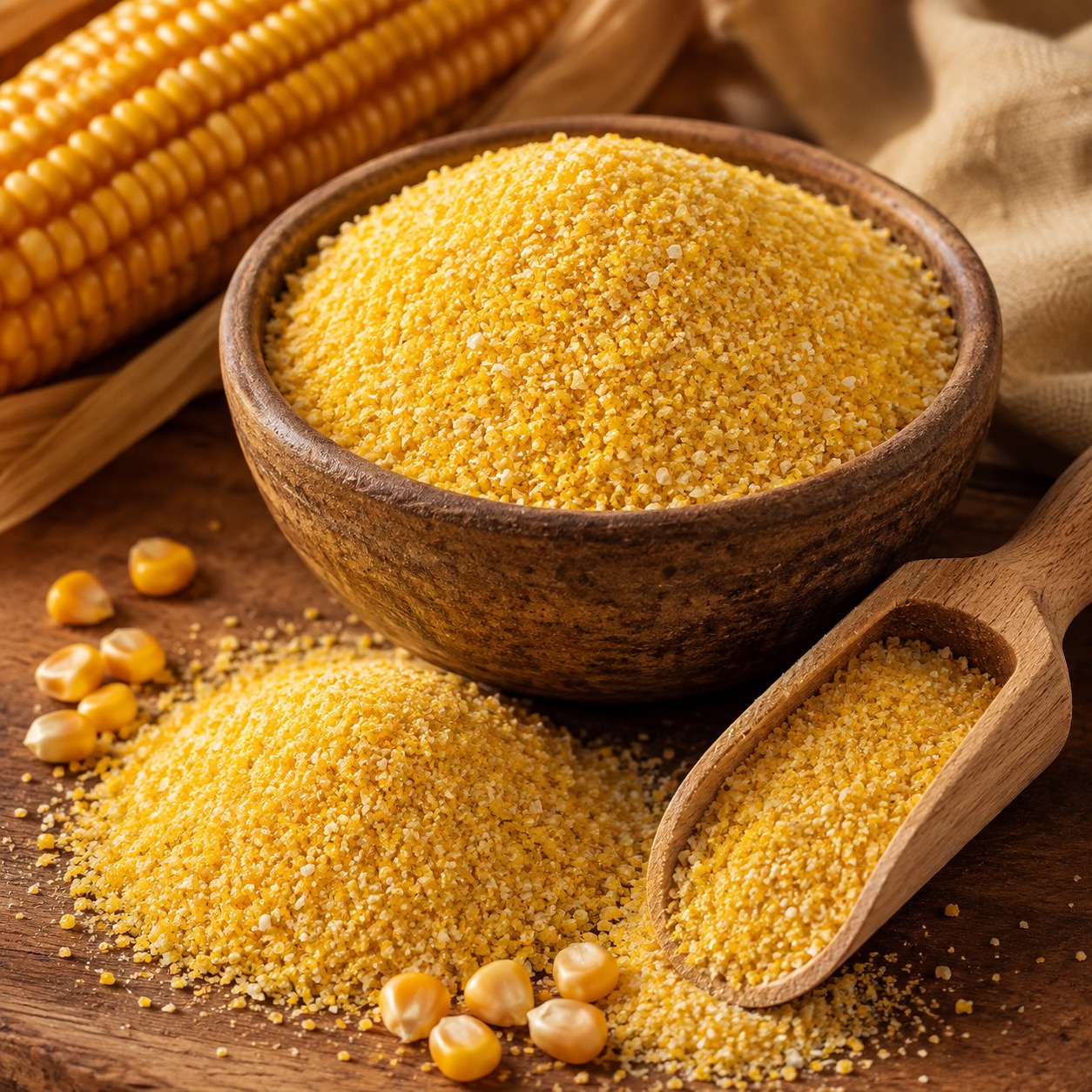
Cornmeal for polenta is one of the great foundational pantry ingredients of Italian cooking. Its identity is shaped by the corn variety, the grind size, the milling process, and the final texture desired: soft spoonable polenta, firm polenta for cooling and cutting, grilled polenta, breaded and fried polenta, or steamed slices used as a side for meat, fish, and vegetable dishes.

Polenta Cornmeal White Polenta Coarse to Fine Water Ratio Veneto Tradition
Cornmeal ingredient icon
Ingredient Identity Cornmeal / polenta flour page for origins, cultivation, processing, nutrition, and practical kitchen application.
Back to Flours Library

Overview

What polenta flour is

Polenta flour is cornmeal made from dried maize that is milled to a chosen particle size. In Italy, the word polenta refers both to the finished dish and, in everyday usage, to the cornmeal used to make it. Traditional polenta is not a wheat flour product: it is a ground corn product whose texture may range from fine to coarse, with each grind producing a different mouthfeel and cooking time.

The best professional approach is to think of cornmeal by function: fine grind for a smoother and faster-cooking result, medium grind for balanced texture, and coarse grind for a rustic traditional polenta with more chew, more visible grain, and longer cooking.

Tradition · Origins · History

From ancient grain porridges to the maize polenta of Italy

Long before maize arrived in Europe, Italians already prepared grain porridges from cereals and pulses. After maize spread through Europe following its introduction from the Americas, corn progressively became a dominant raw material for polenta in many northern Italian regions.

Polenta developed into an emblematic staple in areas such as Lombardy, Veneto, Friuli-Venezia Giulia, Trentino, and parts of Piedmont. It was economical, nourishing, adaptable, and capable of supporting both peasant cuisine and refined plated dishes.

Over time, regional traditions created variations in color, texture, and service style. Yellow polenta became common in many areas, while white corn polenta achieved special importance in Veneto, especially as a partner for fish dishes from the lagoon and coastal zones.

Today, polenta remains one of the most versatile preparations in the Italian culinary repertoire: it may be served soft, enriched with butter or cheese, cooled and sliced, grilled over embers, breaded and fried, or steamed and presented as a side base under braised or roasted foods.

Cultivation & agricultural identity

Corn cultivation shapes the final product

Maize cultivation

Corn for polenta is cultivated for maturity and dryness. The kernels are allowed to fully develop, then dried so they can be stored and milled. Farming conditions such as soil, irrigation, climate, and cultivar selection all influence flavor and texture.

Kernel structure

The endosperm structure affects how the corn breaks during milling. Harder, flint-like kernels generally produce a more granular meal, while softer material may yield a finer, smoother texture.

Color & flavor

Varieties may be yellow, golden, or white. Pigment differences influence appearance, but the culinary identity also depends on sweetness, aroma, and how the milled particles absorb water during cooking.

Varieties & milling

Coarse, medium, fine and how the mill changes polenta

Milling controls particle size and therefore texture, hydration, and cooking performance. Traditional stone-milling is often valued for rustic character and fuller flavor expression, while modern milling can deliver more standardized results. For recipe development, the critical operational factor is the grind size.

Grind / Type Texture Typical Water Ratio Range Approximate Cooking Time Best Uses
Fine cornmeal Smoother, smaller particles 4.5:1 to 5:1 30–40 minutes Soft polenta, smoother service, quick finishing
Medium cornmeal Balanced body and grain character 4:1 to 4.5:1 40–50 minutes General-purpose polenta, plated service, side dishes
Coarse cornmeal Rustic, visible granules, more chew 3.5:1 to 4.25:1 50–60+ minutes Firm polenta, cooling and cutting, grilling, frying
White cornmeal May be fine to medium; delicate appearance 4:1 to 4.75:1 35–50 minutes Venetian fish dishes, soft or sliceable white polenta
Chef's production note: water ratio is a starting structure, not a rigid law. Humidity, grind, milling method, age of the product, and the final desired texture all affect absorption. For high-volume kitchen production, always test and document the exact ratio that works for your brand and service style.

Interactive production tool

Polenta water calculator

Use this form to calculate the amount of water needed for polenta fabrication based on the quantity of cornmeal and the desired final style. The calculator is designed as a practical kitchen planning tool and can be adjusted based on your preferred texture.

Production result
500 g Cornmeal
2000 g Water needed
2.00 L Water volume
20 g Salt by selected %

For 500 g of cornmeal at a 4:1 ratio, start with 2000 g (about 2.00 liters) of water.

Technique

Basic professional method for fabrication

1. Boil the liquid

Bring water to a gentle boil with salt. Some kitchens enrich with a little milk, stock, butter, or olive oil depending on the recipe.

2. Rain in the cornmeal

Whisk continuously while adding the cornmeal slowly to avoid lumps and to hydrate the particles evenly.

3. Stir and simmer

Reduce to a controlled simmer. Stir with a whisk first, then a spoon or paddle as the mixture thickens.

4. Finish by texture

Cook until the raw grain taste is gone and the desired body is achieved. Adjust with hot water if needed during cooking.

Cooling · cutting · reheating

How to cool polenta for slicing, grilling, frying or steaming

1
Spread while hot. Transfer freshly cooked firm polenta into a lightly oiled tray, shallow pan, or sheet pan. Level it with a spatula to the thickness desired for later cutting.
2
Cool gradually, then chill. Let the tray lose steam first, then refrigerate until the mass is completely firm. The goal is a sliceable structure that can hold its shape.
3
Cut clean portions. Once cold and firm, cut into squares, rectangles, triangles, rounds, or baton shapes depending on the final service concept.
4
Reheat according to final use. Grill for char and smoky flavor, bread and fry for crispness, steam gently for a tender side dish, or rewarm with moisture if you want a softer service texture.

Grilled polenta

Brush or season the slices lightly, then grill until warm through with attractive marks. This is excellent as a base for mushrooms, braises, seafood, or grilled vegetables.

Breaded and fried polenta

Chill until very firm, portion, then bread lightly and fry until golden. This works very well for appetizer service and can support toppings, ragouts, or fried seafood.

Steamed or gently reheated

Firm polenta can also be reheated with steam or gentle moist heat and served as a clean side dish. Soft polenta may be refreshed with hot liquid and whisked before service.

Soft polenta

Soft, spoonable polenta as a plated element

Soft polenta is one of the most elegant and comforting expressions of cornmeal. It is typically cooked with a higher water ratio, served immediately, and may be finished with butter, olive oil, Parmigiano Reggiano, Pecorino, mascarpone, or a flavored stock base.

On the plate, soft polenta functions as both starch and sauce carrier. It supports braised meats, ragouts, mushrooms, sausages, grilled vegetables, seafood preparations, and roasted or stewed dishes. Its role is not only to add substance, but also to provide a warm creamy base that captures juices and flavors.
Regional identity

White corn polenta in Veneto

White corn polenta is a notable tradition in Veneto. Its paler color and distinctive delicacy make it especially appropriate in Venetian-style service, where it is frequently paired with fish. It can be presented soft or cooled and cut, depending on the dish.

In the Venetian culinary environment, white polenta is commonly associated with lagoon and coastal cooking. It may accompany grilled fish, roasted fish, and seafood dishes whose flavor benefits from a softer, lighter, less visually dominant starch.

White polenta also relates beautifully to dishes with squid ink sauce, where the contrast of pale polenta and dark sauce has both aesthetic and culinary appeal. The gentle sweetness of the corn supports briny marine flavors without overwhelming them.

For professional menu design, white polenta is especially effective when you want the fish to remain visually and aromatically central while still offering a traditional regional starch foundation.

Nutrition

Nutrition and practical considerations

Carbohydrate source

Cornmeal is primarily a carbohydrate ingredient and serves as an energy-giving starch in the kitchen.

Gluten note

Pure cornmeal is naturally gluten-free, but cross-contact may occur depending on processing and packaging environments.

Fiber and micronutrients

The nutritional profile varies with milling and refinement. Less refined products may retain more fiber and character.

Preparation impact

Butter, cheese, frying, breading, and service accompaniments can significantly change the final nutritional profile of the dish.

Operational note: Nutrition of finished polenta depends heavily on the formulation. Soft polenta with butter and cheese, grilled cooled polenta, and fried breaded polenta are three different finished products and should be treated separately in recipe costing and nutrition calculations.

Platform use

Tuscany Cuisine system connection

Ingredient icon

This page uses the dedicated graphic cornmeal.png and establishes the educational identity for the ingredient inside the platform.

Recipe connection

The ingredient connects directly with appetizer applications such as crispy polenta preparations and future recipes that use firm or soft polenta.

Operational value

By defining grind, hydration, cooking time, and service applications, the page supports recipe development, labor planning, and future ingredient synchronization.