Overview
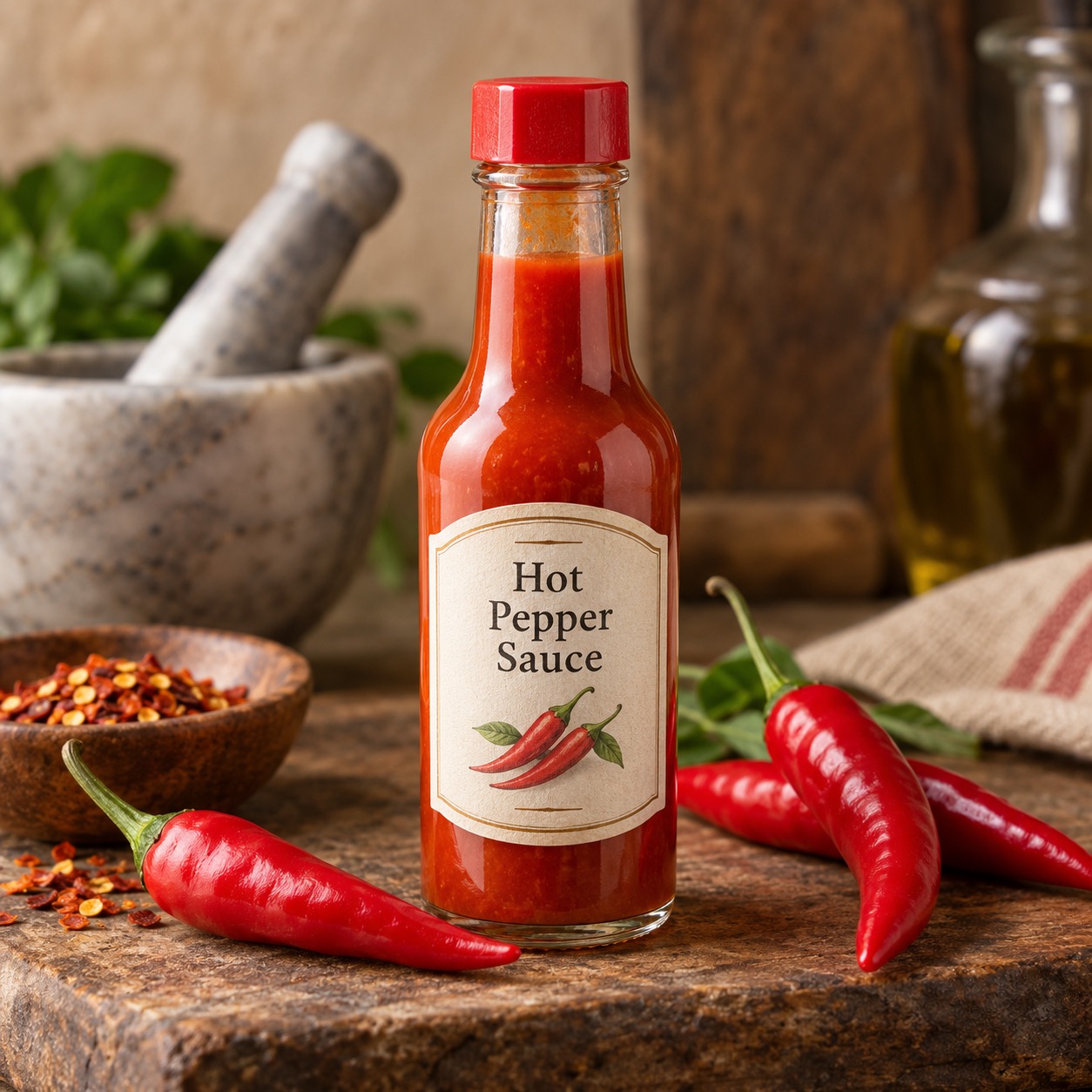
Tabasco sauce is one of the most recognized hot pepper sauces in the professional kitchen. It is valued not for heaviness or sweetness, but for a clean, vinegary pepper heat that wakes up food without covering its identity. In small doses, it sharpens broths, eggs, shellfish, roasted vegetables, meats, and finishing sauces.
History & Origin
Tabasco sauce is historically linked to Avery Island, Louisiana, and to the McIlhenny family. It is widely credited to Edmund McIlhenny, who began producing the sauce in the late nineteenth century, with commercial production dating to 1868. The sauce became an American classic because it transformed a simple combination of peppers, salt, and vinegar into a reliable bottled condiment with international appeal.
The name “Tabasco” refers to the tabasco pepper, a chili known for its juicy flesh and direct, penetrating heat. Over time, the sauce moved from a regional Louisiana seasoning to a worldwide pantry staple. Its success came from consistency, portability, and a flavor that could season nearly anything from oysters and eggs to soups and steaks.
Who Created It and Why
Edmund McIlhenny is traditionally credited as the creator of the commercial sauce. Working in Louisiana after the Civil War period, he developed a pepper sauce that could preserve the vivid character of chili peppers and provide a practical table seasoning. The idea was simple but powerful: create a stable bottled condiment that added immediate heat and acidity without requiring a kitchen to prepare fresh chili condiments every day.
The sauce became important because it solved a real culinary problem. It gave restaurants, households, and later industrial food service a standardized source of pepper heat and brightness in a compact form that was easy to store and easy to portion.
Traditional Production
Classic Tabasco-style sauce is built from a short ingredient list: tabasco peppers, salt, and distilled vinegar. What gives it character is not complexity on paper, but the controlled aging and maturation of the pepper mash before bottling.
General production logic
- Pepper harvest: ripe peppers are selected for color and flavor maturity.
- Mash and salting: the peppers are crushed into a mash and salted.
- Aging: the mash is rested and matured, traditionally in barrels, to deepen flavor and round out the heat.
- Blending with vinegar: the matured pepper mash is mixed with vinegar to create the final liquid seasoning profile.
- Straining and bottling: solids are refined out and the finished sauce is bottled for service and retail use.
Culinary Usage
In the professional kitchen, Tabasco is a finishing condiment, correction tool, and service-table companion. It is especially useful when a preparation needs more liveliness without adding fat or major volume.
- Soups and broths: brightens consommés, chowders, vegetable soups, and bean soups.
- Egg cookery: classic with scrambled eggs, omelets, fried eggs, and egg-based brunch service.
- Seafood: excellent with oysters, shrimp, crab, fried seafood, and cocktail sauce variations.
- Meat dishes: supports burgers, grilled chicken, braises, steak sauces, and marinades.
- Vegetables and legumes: useful in greens, beans, roasted peppers, and grain bowls.
- Bar use: essential in Bloody Mary service and other savory cocktails.
Nutrition & Storage
| Topic | Practical Note |
|---|---|
| Calories | Very low per serving because only a few drops are typically used. |
| Fat | Essentially none. |
| Sugar | Usually negligible in the classic style. |
| Sodium | Contains sodium from salt; modest per small serving but cumulative in high-volume use. |
| Heat source | Capsaicin from tabasco peppers. |
| Storage | Store sealed in a cool dry place. After opening, refrigeration can help preserve peak flavor, though many operations hold it in the pantry or on the line depending on service style and manufacturer guidance. |