Flavor
Fresh, grassy and lightly peppery, with gentle celery and mineral notes. Flat-leaf types are generally selected by chefs for a more assertive flavor.
Petroselinum crispum var. neapolitanum
Known in Italy as prezzemolo, flat-leaf parsley is far more than a garnish. Its clean green aroma, gentle pepperiness and celery-like freshness make it a foundational finishing herb for sauces, seafood, vegetables, braises, soups and cold preparations.
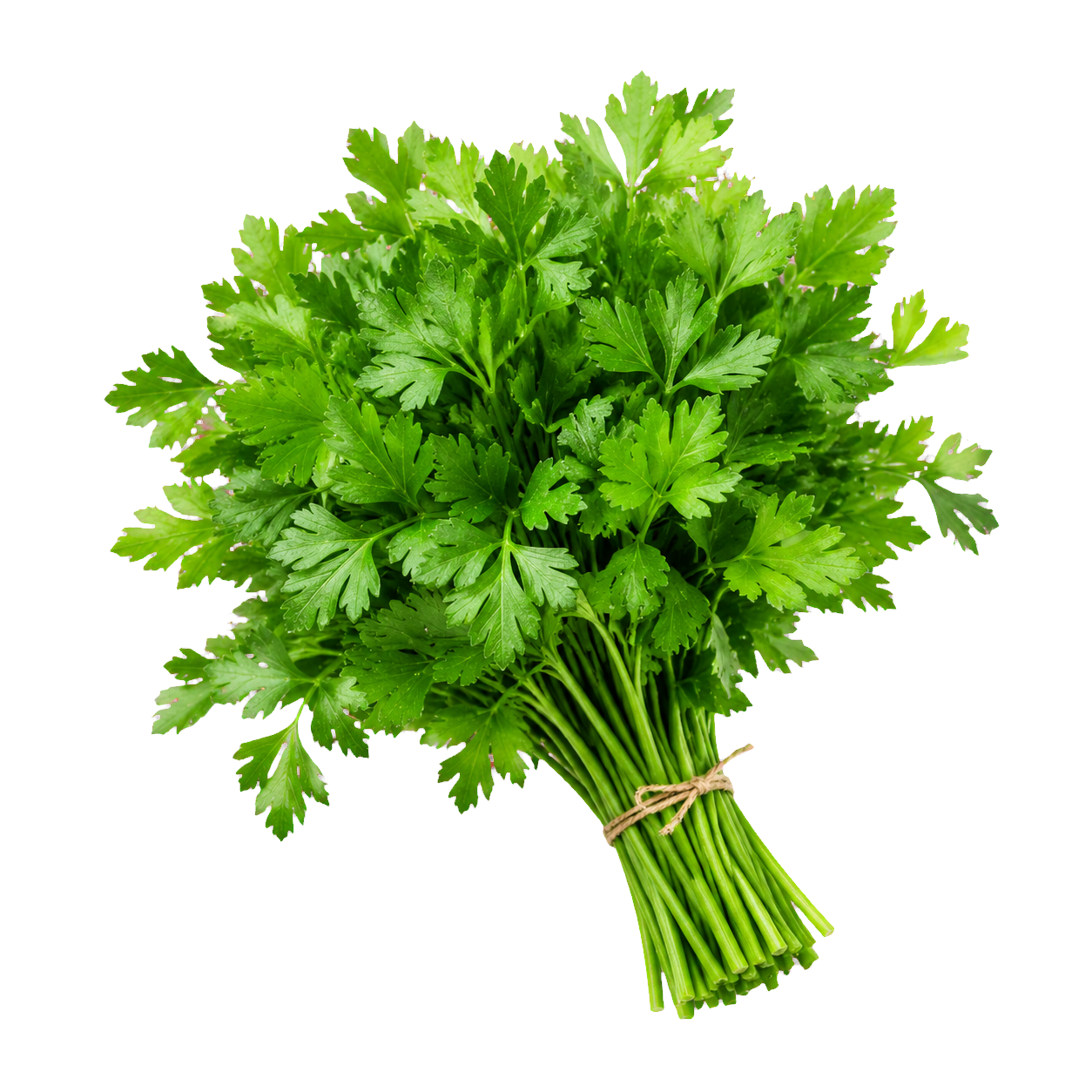
Parsley belongs to the carrot family, Apiaceae. The Tuscany Cuisine record represents Italian flat-leaf parsley only, because its flavor, usable yield, vendor specification and culinary purpose differ from curly parsley and root parsley.
Kew recognizes Petroselinum crispum as an accepted species with a native range centered in northwestern Africa and the Balkan Peninsula. Culinary and horticultural sources commonly describe it more broadly as a Mediterranean herb.
Fresh, grassy and lightly peppery, with gentle celery and mineral notes. Flat-leaf types are generally selected by chefs for a more assertive flavor.
Clean and herbal. Chopping releases volatile aromas quickly, so parsley is best cut close to service when a bright finish is desired.
Delicate leaves with crisp, flavorful stems. Tender stems can be minced with the leaves; firmer stems are excellent in stocks, braises and herb bundles.
Parsley has traveled through ceremony, garden culture and everyday cooking. Its modern role is practical and global, but its story begins in the ancient Mediterranean world.
Ancient Greek culture connected parsley with remembrance, victory and mythology. University of California, Davis records its association with Zeus and Persephone and its use in ceremonial crowns.
Over centuries, parsley became established in Mediterranean and European gardens. The name is traditionally traced to Greek petroselinon, often interpreted as “rock celery,” a reminder of its botanical relationship to celery.
Italian cooks use flat-leaf parsley in battuti, gremolata, salsa verde, broths, seafood, vegetables, mushrooms and braised dishes. It may build flavor early through the stems or finish a plate with the leaves.
Today parsley is central to Italian, French, Levantine, North African, Balkan, Central European and American cooking. Its neutrality and freshness allow it to connect garlic, citrus, olive oil, meats, seafood, grains and vegetables.
Common names can mislead buyers. Only the first four entries below belong to the culinary parsley group represented by Petroselinum crispum. The others require their own ingredient and inventory identities.
P. crispum var. neapolitanum. Broad flat leaves, strong aroma and clean flavor. Preferred for chopping, sauces and cooked preparations. This is the Tuscany Cuisine primary record.
P. crispum var. crispum. Densely curled leaves, decorative texture and a typically milder flavor. Common as a garnish and in cold displays.
P. crispum var. tuberosum. Grown for its pale, parsnip-like root; the leaves are also edible. Popular in parts of Central and Eastern Europe for soups, purées and roasting.
A robust flat-leaf selection with tall stems and strongly aromatic leaves. It belongs under the flat-leaf family but individual vendor cultivars may have different bunch weight and yield.
Cryptotaenia japonica. A Japanese herb with a distinctive celery, chervil and angelica character. It is not a substitute record for Italian parsley.
Coriandrum sativum. Cilantro has a much more polarizing citrus-herbal flavor and must retain a separate herb code, icon and purchasing specification.
Anthriscus cerefolium. A delicate herb with soft anise notes, used in French fines herbes. It should not be mapped to the parsley inventory record.
Parsley is a hardy biennial, although chefs and growers usually treat it as an annual for the best leaves. In cool climates it is commonly harvested from late spring through autumn; in mild Mediterranean climates it can remain productive for much of the year, with particularly good quality in cooler months.
During the first season, parsley concentrates on leaf and root growth. After winter exposure, the second-year plant sends up a flower stalk, produces small umbrella-shaped flowers and eventually seed.
Once bolting begins, leaves become coarser and flavor quality declines. Commercial kitchens should rotate to younger plants or newly harvested bunches rather than treating bolted parsley as equivalent inventory.
Parsley should arrive cold, lively and aromatic. Seasonality changes bunch size and stem percentage, so receiving teams should record actual usable yield instead of assuming every bunch produces the same amount.
Fresh parsley is low in calories and provides vitamin K, vitamin C, provitamin A carotenoids, folate and iron. Because culinary portions are often small, its greatest value comes from using it generously and consistently as part of a varied diet—not from treating it as medicine.
Vitamin K supports normal blood clotting and contributes to bone health. Parsley is highly concentrated in vitamin K by weight.
Vitamin C supports collagen formation, antioxidant protection and absorption of non-heme iron from plant foods.
Parsley's carotenoids contribute vitamin A activity, which supports normal vision, immune function and healthy tissues.
Folate participates in DNA synthesis and normal cell division. Parsley adds a small amount in typical culinary portions.
A parsley bunch is purchased as fresh produce but consumed by usable gram weight. Good receiving standards prevent the inventory system from paying for yellow leaves, damaged stems, excess water or decayed material.
| Checkpoint | Accept | Reject or flag |
|---|---|---|
| Color | Vibrant, even dark green leaves and healthy green stems | Yellowing, blackened edges, pale growth or widespread spotting |
| Texture | Crisp leaves and firm, flexible stems | Severe wilting, sliminess, mushy stems or crushing |
| Aroma | Fresh, clean and distinctly herbal | Sour, fermented, musty or chemical odor |
| Moisture | Clean bunch with minimal free water | Standing water, excessive condensation, ice damage or decay |
| Pack accuracy | Correct herb, bunch count, lot and origin information | Curly parsley, cilantro or another herb substituted without approval |
Hold in refrigerated produce storage, approximately 1–4°C / 34–39°F. Protect bunches from warm air, direct fan exposure and freezing surfaces.
Keep leaves from sitting in water. If washed before storage, spin or drain thoroughly and store in a clean covered container with controlled humidity.
Label the received date and lot, then use first-in, first-out while prioritizing the bunch that is losing quality fastest. Record trim loss for costing.
The leaves provide a fresh finish, while tender stems contribute the same parsley identity with more texture. Separating them by culinary purpose improves yield and makes the flavor more deliberate.
Use stems or coarsely chopped parsley in stocks, soups, braises, tomato sauces and aromatic bases when the herb should integrate.
Add leaves near the end to retain green color, clean aroma and fresh flavor.
Finish with freshly chopped leaves, gremolata, salsa verde, compound butter or parsley oil when brightness and visual contrast matter.
Parsley is not decoration added without purpose. In Tuscan and Italian cooking it often completes the architecture of a dish: garlic supplies warmth, olive oil carries aroma, lemon or vinegar provides lift, and parsley brings the final green freshness.
Gremolata, salsa verde, aglio e olio, seafood sauces, stuffed vegetables, soups, braises and mushroom preparations.
Tabbouleh, grain salads, herb salads, lemon dressings, grilled meats, fish and vegetable mezze.
Persillade, maître d'hôtel butter, herb crusts, soups, root vegetables, dumplings and cold sauces.
The page registers parsley as an ingredient catalog record. It supplies the same identity and icon to recipes, production, station picking, inventory, vendor references, purchasing and receiving without creating a purchase order simply because the page was opened.
TC-ICON-HERB-PARSLEY-FLAT
Deduct by grams while preserving the vendor purchase unit as a bunch. Actual received bunch weight should be recorded when available.
Display the parsley icon, required weight, recipe use and Garde Manger routing on production pick lists.
Group under Produce / Fresh Herbs and maintain the flat-leaf specification to prevent curly parsley substitutions.
Confirm code, icon, bunch count, weight, temperature, quality, lot and usable-yield condition before posting inventory.
Botanical, horticultural and nutritional details were cross-checked against scientific institutions, university extension services and U.S. government nutrition resources.
Educational notice: nutrition values are approximate and health information is general education, not medical advice. Growing season, shelf life and usable yield vary with climate, cultivar, post-harvest handling and vendor pack. Follow local food-safety regulations and your operation's HACCP procedures.