Tuscany Cuisine Ingredient Library · Professional culinary knowledge by Chef David Giani
Produce Ingredient · Culinary Foundation

Potato

The potato, Solanum tuberosum, is one of the world's most important food crops and one of the most technically versatile ingredients in the professional kitchen. Variety, starch, sugar, moisture, size and maturity determine whether a potato performs best baked, fried, mashed, puréed, roasted, steamed, boiled or processed.

Produce Andean Origin Starchy Tuber Gluten-Free Fresh & Processed Global Staple
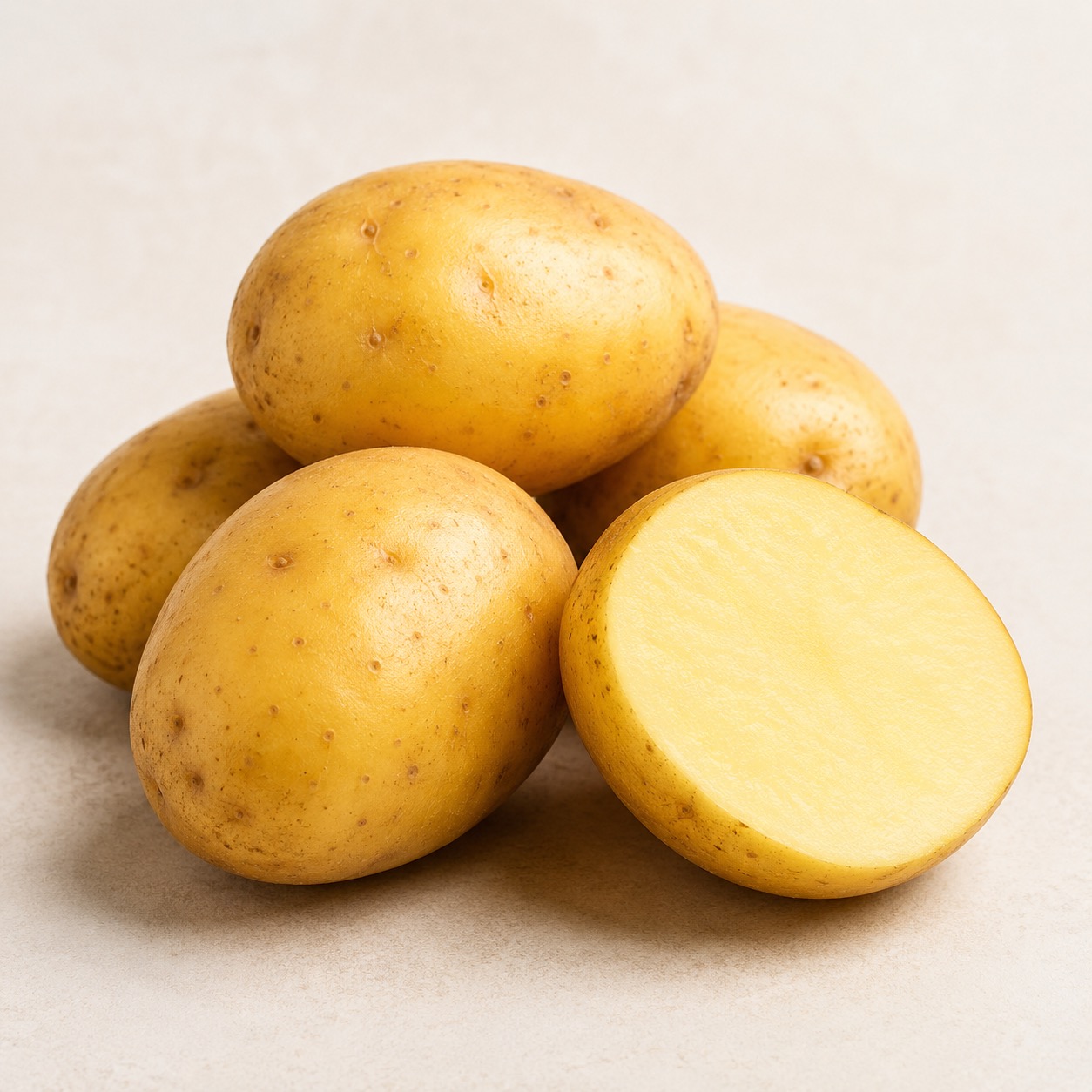
Golden potatoes with a cut potato half ingredient graphic
Botanical Identity Solanum tuberosum Edible underground tuber in the nightshade family.
Current Recipe Variant Baby Potatoes Inventory alias currently used by the Chicken Faux Gras recipe.
Base Unit Gram (g) Canonical kitchen unit for recipe scaling, inventory and costing.
Culinary Key Starch + Moisture These two properties largely determine the correct cooking method.
Ingredient Identity

What Is a Potato?

A potato is a swollen underground stem called a tuber. It stores starch and nutrients for the plant and reproduces vegetatively through the buds commonly called “eyes.”

One Ingredient, Many Performances

Potatoes may look similar but can behave very differently. High-starch potatoes become dry and fluffy when baked and produce a light purée. Waxy potatoes contain more moisture and hold their shape during boiling, steaming and salad preparation. All-purpose types fall between those two extremes.

Skin color alone does not completely determine cooking performance. Variety, growing conditions, maturity, storage temperature and sugar development can change frying color, texture and flavor.

Potato Type vs. Potato Size

“Baby,” “petite” and “medley” often describe size or a mixed retail pack rather than one botanical variety. A baby potato can be red, yellow, white or purple. A medley may combine several colors and varieties selected for visual contrast.

Professional purchasing principle: order by the result you need. Specify type or variety, size range, intended cooking method and quality grade rather than purchasing only by the word “potato.”
History of Cultivation

From the Andes to the World

The potato was domesticated in the Andes thousands of years before becoming a global agricultural and culinary staple.

About 8,000 Years Ago

Andean Domestication

Farmers near the high Andes and Lake Titicaca selected edible wild tubers and developed a vast diversity of adapted potato forms.

Pre-Columbian Andes

Food Security & Preservation

Potatoes became central to Andean food systems. Highland communities developed sophisticated cultivation, storage and preservation practices adapted to altitude and frost.

16th Century

Arrival in Europe

Spanish contact with the Andes carried potatoes to Europe, where adoption was gradual before the crop became important to agriculture and working-class diets.

Modern Era

A Global Crop

Breeding, irrigation, mechanization, storage and industrial processing transformed potatoes into a major fresh-market and processed-food commodity.

The International Potato Center reports more than 4,000 native potato varieties in the Andean highlands. Their extraordinary range of colors, shapes, textures and adaptations remains an important source of culinary heritage and crop biodiversity.
Professional Potato Types

Major Types, Flavor Profiles & Best Uses

U.S. retail and foodservice references commonly organize potatoes into seven broad types: Russet, Red, White, Yellow, Blue/Purple, Fingerling and Petite.

Russet

High starch, relatively dry flesh, earthy mild flavor and fluffy cooked texture. Excellent for baking, french fries, pommes purée, gnocchi and crisp roasting.

Best: Baking · Frying · Purée

Yellow

Creamy dense flesh with naturally buttery flavor. Excellent roasted, mashed, gratinéed, pan-roasted or used when a richer potato flavor is desired.

Best: Roasting · Mash · Gratin

Red

Thin red skin, moist waxy flesh and firm texture. Holds shape well and works beautifully in salads, soups, stews, steaming and roasting.

Best: Salads · Soups · Roasting

White

Thin skin, creamy to firm flesh and a mild, slightly nutty flavor. Useful for boiling, sautéing, soups, gratins, salads and some frying applications.

Best: Boiling · Sauté · Soups

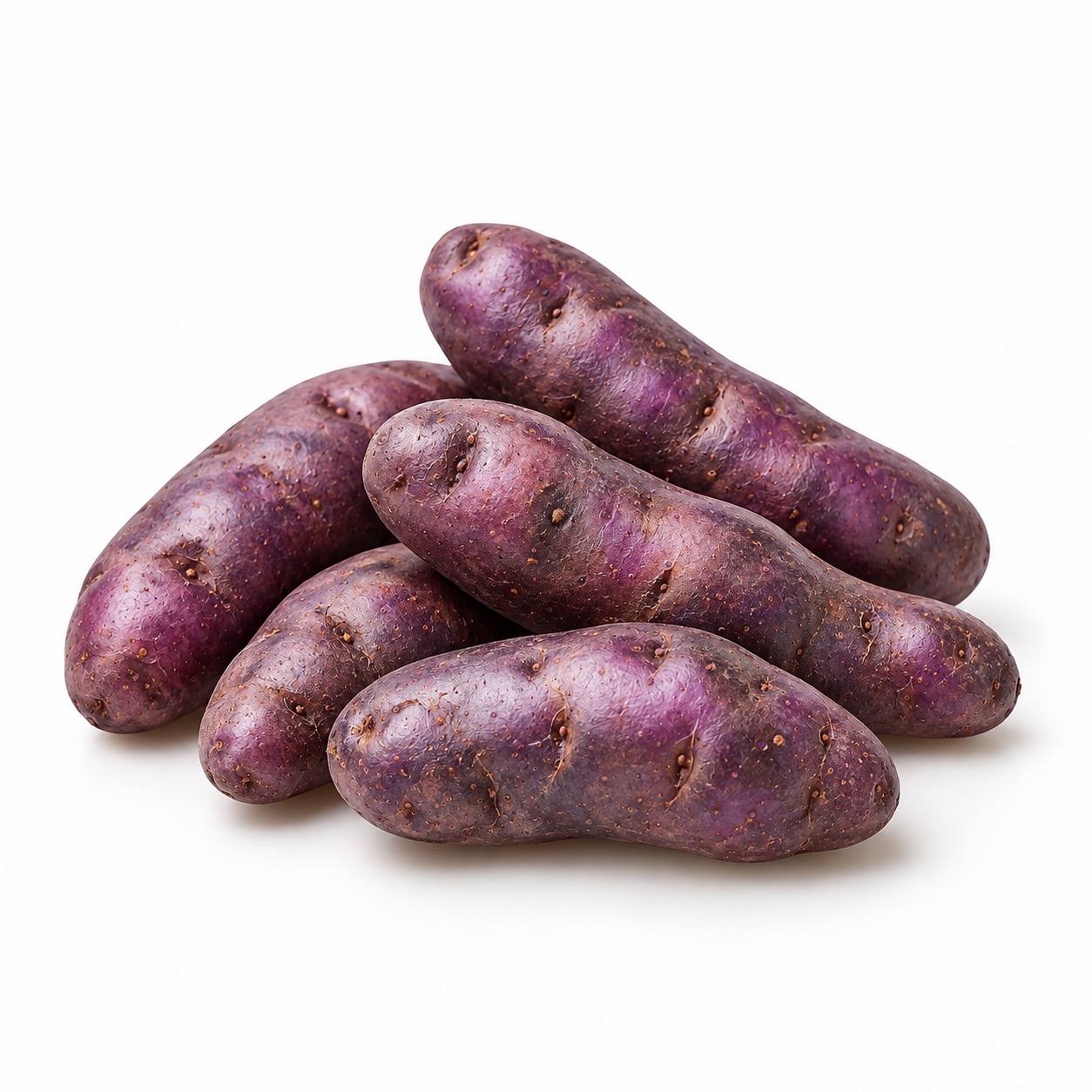
Blue / Purple

Visually dramatic skin and flesh with earthy, nutty character. Best where color can remain visible: roasting, steaming, potato salads, composed plates and garnishes.

Best: Roasting · Steaming · Presentation

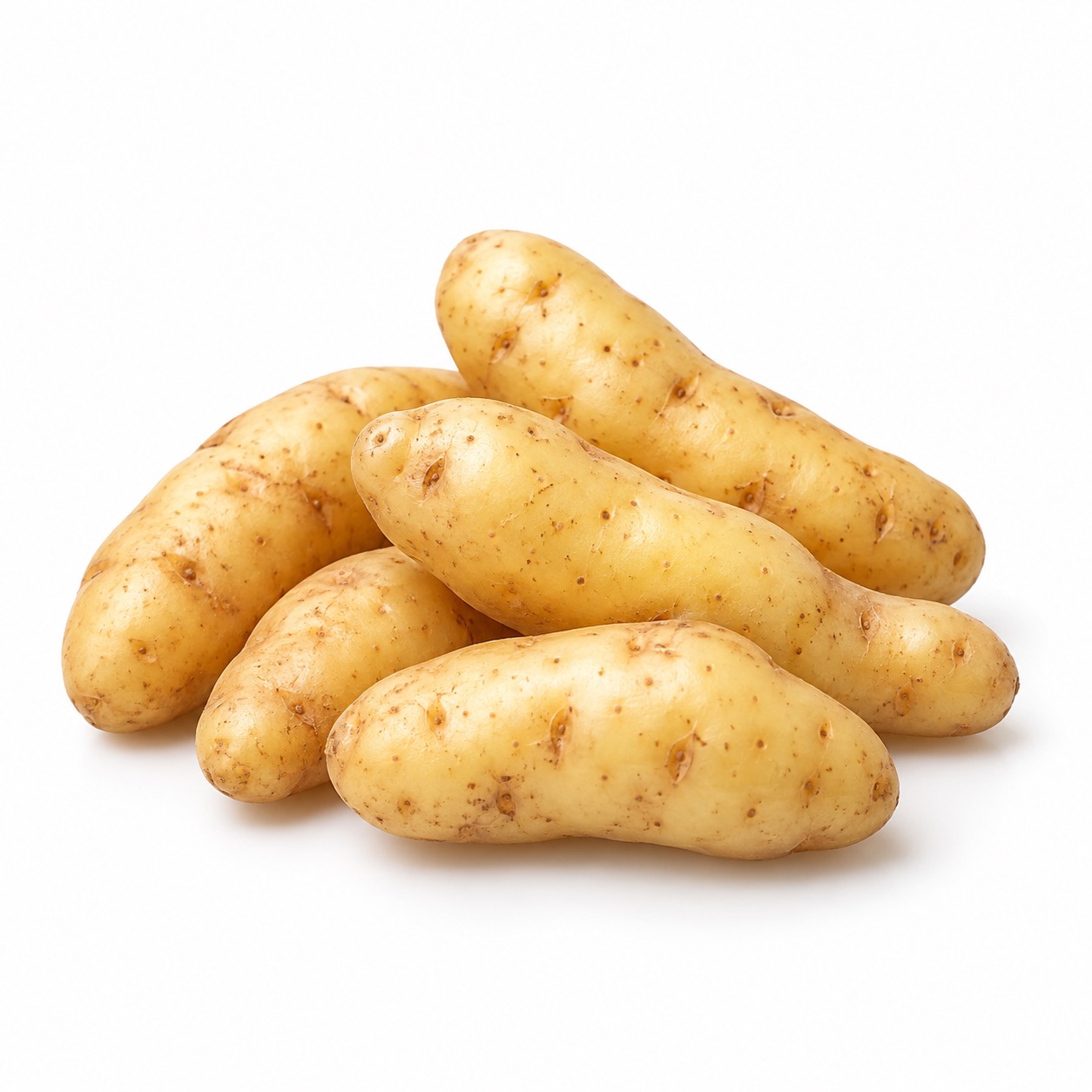
Fingerling

Small elongated potatoes with firm, often waxy flesh and nutty or buttery flavor. Excellent whole or halved for roasting, pan cooking and warm salads.

Best: Roasting · Sauté · Warm Salads

Baby / Petite / Round

Small-format potatoes prized for quick cooking, attractive presentation and a high skin-to-flesh ratio. They may be yellow, red, white or purple depending on the pack.

Best: Whole Roasting · Steaming · Glazing

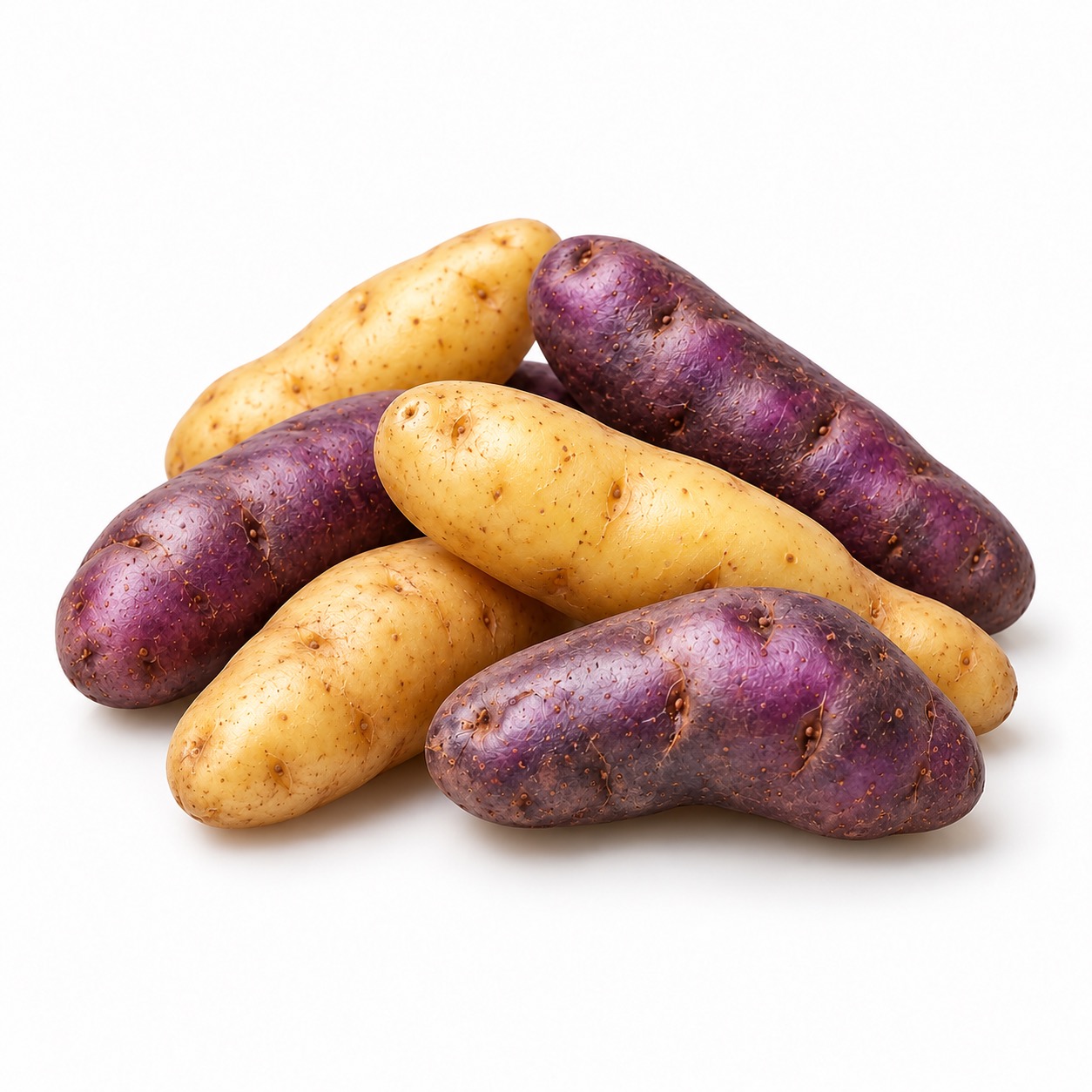
Medley

Mixed packs of small red, yellow, white and purple potatoes. Best used when visual diversity is important and all components have similar size for even cooking.

Best: Roasting · Banquet · Plate Color
Choose the Correct Potato

Baking, Frying, Purée, Roasting & Salad

Texture goals should determine potato selection before production begins.

Technique Best Potato Profile Recommended Types Why It Works Professional Note
Baking High starch, dry flesh Russet and similar floury varieties Steam expands the dry starch matrix into a light, fluffy interior. Choose uniform size for predictable service timing.
French Fries High starch, low reducing sugar, long tubers Processing Russets and dedicated fry varieties High solids promote crispness and lower oil absorption; low sugar helps prevent excessive darkening. Storage temperature matters because cold-induced sweetening can darken fries.
Mashed Potato / Purée Floury to medium-high starch Russet; yellow potatoes for richer flavor Starch creates a light, absorbent texture that accepts butter and dairy. Do not overwork after cooking; ruptured starch can create gluey texture.
Roasting Medium starch or waxy with strong skin Yellow, red, fingerling, petite, medley; Russet for very crisp style Firm varieties keep shape while surfaces caramelize and crisp. Cut to equal size and dry surfaces before oiling.
Potato Salad Waxy, moist, shape-holding Red, white, fingerling, petite Lower starch helps pieces remain intact after cooking and dressing. Season while warm when appropriate to improve flavor absorption.
Soups & Stews Waxy or all-purpose Red, white, yellow Maintains structure during moist cooking. Use floury potatoes deliberately when you want natural thickening.
Gnocchi Dry, floury, high starch Russet or similar baking potato Less water generally means less flour is needed for a tender dough. Bake or steam rather than waterlog the potato whenever possible.
Quality & Purchasing

How to Evaluate Fresh Potatoes

Firmness & Shape

Select firm potatoes appropriate to the expected variety and pack. Avoid soft, shriveled or wet tubers. Uniformity matters when the potatoes will be cooked whole or portioned automatically.

Skin & Defects

Evaluate cuts, bruising, rot, severe scab, deep growth cracks, sprouting and mechanical damage. USDA U.S. No. 1 standards require potatoes to be firm, fairly clean, fairly well shaped and free from specified serious defects.

Green Color & Sprouting

Green skin indicates light exposure and can accompany increased glycoalkaloids. Bitter, heavily green or extensively sprouted potatoes should not be used in professional production.

Fry Color

Potatoes intended for frying must have controlled reducing sugar levels. Excess sugar produces overly dark fries before the interior is properly cooked.

Specific Gravity / Solids

Processors and high-volume operations evaluate solids because dry matter affects fry yield, texture, oil uptake and finished-product consistency.

Size Specification

For baby rounds, fingerlings and medleys, specify the target size range. Consistent diameter is essential for even roasting, steaming and banquet production.

Cultivation, Trade & Market

A Major Global Food and Processing Crop

The International Potato Center describes potato as one of the world's most important food crops, eaten by more than a billion people. FAOSTAT tracks potato production within its global crop statistics, while trade occurs in several distinct channels: fresh table potatoes, seed potatoes, frozen prepared potatoes, chips and dehydrated products.

Fresh Market Table-stock potatoes move through wholesale produce systems, retail packs, foodservice distributors and direct contracts. Variety, size, grade and intended culinary use shape pricing.
Processing Contracts French fry, chip and dehydration plants typically require varieties selected for dry matter, sugar control, tuber shape, defect tolerance and storage performance.
Frozen Trade Frozen french fries and related prepared potatoes form a major international trade. The EU, Canada and the United States are major suppliers, with large processing clusters serving restaurant and retail markets.
Current U.S. Export Context From July 2024 through June 2025, U.S. potato exports were valued at about $2.3 billion; frozen potatoes represented 49% of export volume, illustrating the importance of processed product to the modern potato market.

Market values, trade shares and crop volumes change annually. For live purchasing and vendor decisions, Tuscany Cuisine should use current vendor pricing and current official trade or market reports rather than hard-coded commodity prices.

Industrial Processing

How Frozen Cooked Potato Products Are Made

Frozen french fries, wedges, hash browns and other prepared potatoes are engineered for consistency, speed and storage stability. Exact factory processes vary by product, but the professional sequence commonly follows these stages.

1 · Receiving & Grading Potatoes are sampled for size, solids, sugar level and defects, then cleaned and sorted for the product specification.
2 · Washing & Peeling Soil and foreign material are removed. Industrial peeling may use steam, abrasion or other controlled methods depending on the product.
3 · Cutting & Inspection Potatoes are cut into fries, wedges, dice, shreds or other shapes. Optical and manual inspection removes defects and off-spec pieces.
4 · Blanching Controlled hot-water or steam treatment modifies texture, removes some surface sugars and helps standardize color before frying or freezing.
5 · Drying & Surface Treatment Surface moisture is reduced. Some products receive coatings, seasonings or processing aids designed for crispness and holding performance.
6 · Par-Frying / Pre-Cooking Many frozen fries are partially fried before freezing. Other products may be steam-cooked, baked or otherwise pre-cooked according to the final specification.
7 · Rapid Freezing Product is rapidly frozen to preserve shape and keep pieces separate, supporting efficient storage, shipping and portioning.
8 · Packaging & Cold Chain Frozen product is packed, coded and held under continuous frozen storage until foodservice or retail preparation.
Foodservice advantage: frozen potato products reduce knife labor, waste and batch variability while providing predictable cooking time and yield. The tradeoff is less control over variety, oil, coating, seasoning and pre-processing, so product specifications should be reviewed carefully.
Storage & Production

Professional Storage and Handling

Fresh Potato Storage

Keep potatoes in a cool, dark, dry and well-ventilated area protected from light. Avoid unnecessary exposure to refrigeration temperatures intended for highly perishable produce, because very cold storage can increase reducing sugars and change frying color.

Rotate by receiving date and inspect regularly for moisture, rot, sprouting and greening. Keep potatoes away from excessive heat and direct sunlight.

Prepared Potatoes

Once peeled or cut, potatoes require controlled handling to prevent discoloration and microbial growth. Follow the approved recipe and food-safety plan for holding times, refrigeration and cook/chill procedures.

Frozen potato products should remain frozen according to the manufacturer's specification and should not be repeatedly thawed and refrozen.

Nutrition

Potato Nutrition in Context

Plain potatoes are naturally low in fat; the final nutritional profile changes substantially with frying oil, butter, cream, cheese, salt and portion size.

Nutrition Reference

Approximate plain medium potato · preparation and variety affect values

Calories about 110–160
Primary Energy Source Carbohydrate / starch
Protein modest amount
Fat naturally very low
Potassium meaningful source
Vitamin C meaningful source
Fiber higher when skin is retained
This is an educational overview rather than a recipe nutrition label. Use USDA FoodData Central or the actual vendor product data for precise recipe calculations.
Cooking method matters: a plain baked or steamed potato and a deep-fried potato can have very different energy density and fat content even though they begin with the same ingredient.
Skin and preparation: leaving clean edible skin on appropriate varieties preserves texture and can retain additional fiber. Peeling may still be desirable for refined purées, gnocchi and specific classical preparations.
Green / bitter potatoes: do not rely on cooking to correct heavily green, bitter or severely sprouted potatoes. Reject unsuitable product during receiving and prep.
Tuscany Cuisine Platform

Ingredient System Record

Potato becomes the shared culinary knowledge identity for the potato family. The current Chicken Faux Gras with Artichoke Tart recipe uses the specific Baby Potatoes variant, which can connect to this page and `potatoes.png` while preserving `baby_potatoes` as its inventory alias.

🧾 Master Ingredient Registry Knowledge identity: Potato · Current recipe variant: Baby Potatoes.
🥔 Ingredient Icon /academy/ibrary/veggies/potatoes.png
📖 Ingredient Page /academy/ibrary/veggies/potato.html
🍽 Recipe Library Baby, fingerling, Russet, yellow, red and other potato variants can connect to this professional guide.
📦 Live Inventory Current Chicken Faux Gras alias: baby_potatoes · quantity tracked in grams.
💲 Recipe Costing Case, bag or pound purchase cost can convert into the canonical gram base unit.
🚚 Purchasing & Receiving Record variety/type, size, pack weight, grade, origin, intended cooking use and vendor.
👨‍🍳 Station Pick Lists Recipe quantities aggregate into station production and prep requirements through the shared identity.
🏭 Processed Potato Records Frozen fries, hash browns, flakes and other processed products should keep separate purchasable inventory identities.
System Field Potato Record
Knowledge Name Potato
Botanical Name Solanum tuberosum
Suggested Ingredient Code TC-VEG-POTATO-001
Current Recipe Variant Baby Potatoes
Current Inventory Alias baby_potatoes
Category Produce
Suggested Subcategory Roots & Tubers / Potatoes
Canonical Base Unit g
Storage Zone Cool, Dark, Ventilated Produce Storage
Ingredient Page /academy/ibrary/veggies/potato.html
Icon Path /academy/ibrary/veggies/potatoes.png
Registry API /MENUS1/api/inventory/ingredients/registry.php
Recipe Usage Count Dynamic / Registry Linked Allow the platform to calculate usage as potato variants are connected.
One Ingredient · One Identity: use this page as the central Potato knowledge record. Preserve specific culinary and purchasing variants such as Baby Potato, Fingerling, Russet, Yukon Gold, Red Potato or Purple Potato in the recipe/inventory attributes. Industrial products such as frozen fries or dehydrated potato flakes should remain separate purchasable inventory identities because their cost, yield and preparation are materially different.

Sources & Further Study