Professional ingredient knowledge by Chef David Giani
Produce • Allium Family • Ingredient Record
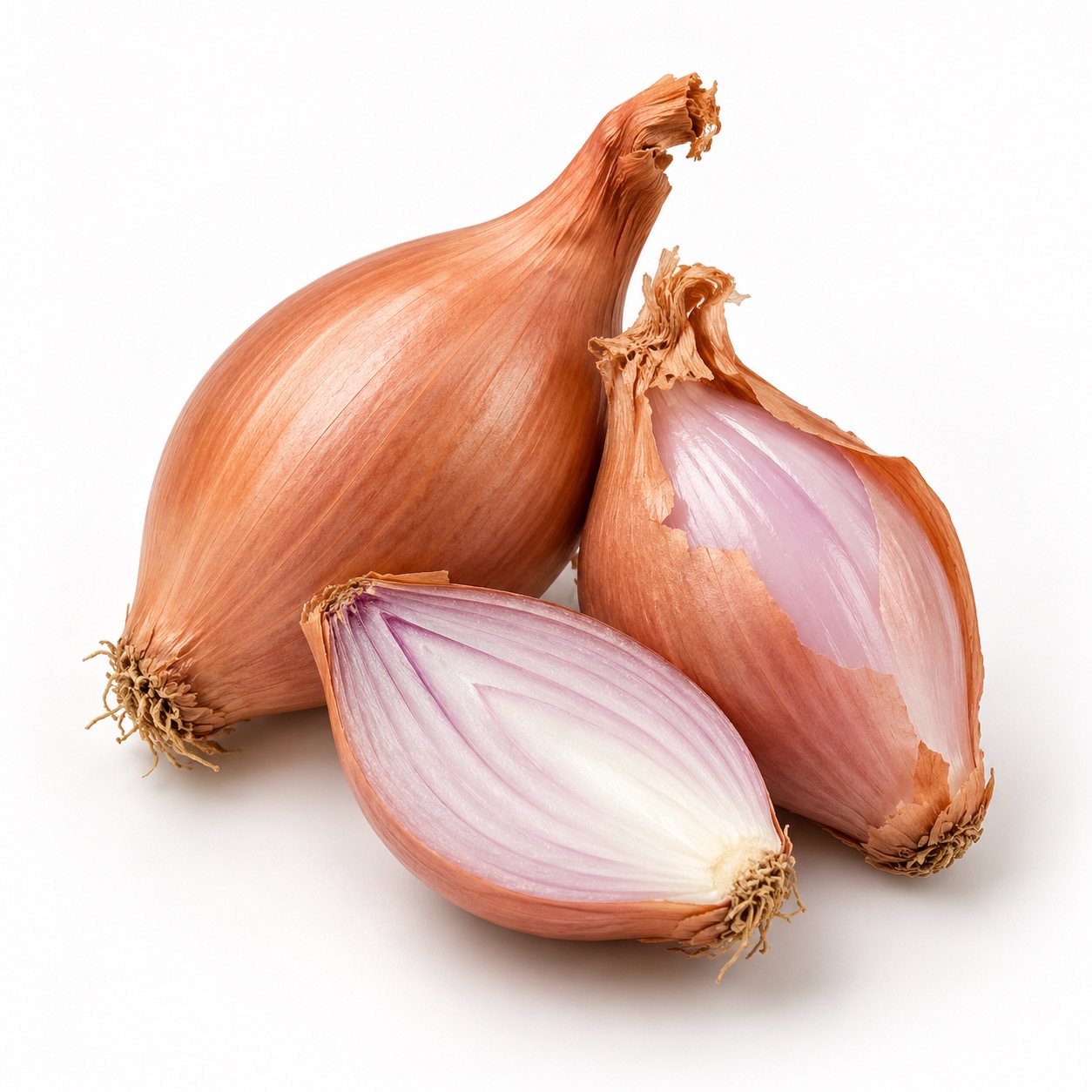
Shallots
A refined allium prized by professional kitchens for its balance of onion sweetness,
gentle garlic-like complexity and clean aromatic finish. Shallots move naturally from
vinaigrettes and raw garnishes to butter sauces, wine reductions, braises, roasts and confit.
The best shallot should be firm and dry, with a tight papery skin and a clean aromatic flavor—
never soft, wet, moldy or aggressively sprouted.
Botanical identityAllium cepaBulbous allium in the Amaryllidaceae family; culinary shallots are cultivated forms of A. cepa.
OriginCentral AsiaAllium cepa is treated by Kew as a Central Asian cultigen with a long history of cultivation and trade.
FlavorSweet · Aromatic · SavoryFiner and less aggressive than many bulb onions, with subtle garlic-like complexity.
Inventory identityProduce · AlliumsBase unit g · Inventory item 76 · icon shallots.webp.
Origins & Culinary History
From Central Asian Cultivation to the Classical Sauce Kitchen
Shallots belong to one of the oldest groups of cultivated culinary alliums. Their long history
across Asian, Middle Eastern and European food cultures eventually made them indispensable in
classical French sauces and modern professional kitchens.
Origin and Development
Modern botanical references place Allium cepa as a cultigen originating in Central Asia.
Shallots are part of this cultivated onion complex and are distinguished in the kitchen by their
clustered bulb habit and more delicate aromatic profile.
Historical naming is often connected with Ascalon in the eastern Mediterranean, which helped
shape the European words used for shallot. Over centuries, regional selection produced long,
half-long, round, pink and gray market types with different intensity, storage life and culinary value.
In France, traditional shallot culture became particularly important in Brittany and the Loire area,
where bulb-propagated shallots remain associated with high-quality market production and classic cuisine.
Cultivation
How Shallots Grow and Reach the Market
Shallots are cool-season alliums. Professional quality begins with full sun, fertile well-drained soil,
even moisture, correct spacing, curing and dry ventilated storage.
Planting
Sets or Seed
Traditional types are commonly propagated from bulbs, while modern shallots may also be produced from seed.
Full sun
Fertile, well-drained soil
Target soil pH about 5.5–7.5
Spacing
Bulb Development
Bulb sets are typically planted about 1–2 inches deep and 3–6 inches apart. Wider spacing encourages larger clusters.
Rows about 12–18 inches apart
Maintain consistent moisture
Avoid waterlogging
Harvest
Top Fall & Curing
Dry bulbs are harvested when the tops fall and mature. The bulbs are then cured until skins and necks are thoroughly dry.
Cure roughly 1–2 weeks
Separate clusters gently
Store dry and ventilated
Production note: Utah State University Extension reports that wider-spaced bulb sets can form clusters of roughly 10–15 bulbs, while dense planting favors smaller or single bulbs. The exact result depends on cultivar, climate and production system.
Seasonality & Availability
Fresh Harvest Is Seasonal; Market Availability Is Nearly Year-Round
Shallot season changes with climate and cultivar. Curing, storage and international production extend availability well beyond the local harvest window.
Late Winter–SpringPlanting season for many temperate regions; overwintered crops may begin reaching local markets.Late Spring–SummerFresh and early harvests begin in warmer climates and from autumn plantings.Mid–Late SummerMajor harvest and curing period in many temperate production areas; Brittany traditionally harvests in July.Autumn–WinterCured shallots provide excellent storage quality, and global trade keeps professional markets supplied.
Chef purchasing perspective: treat “season” and “availability” separately. Specialty Produce describes shallots as globally cultivated and available year-round, while regional fresh crop peaks depend on where and how the shallots were grown.
Market Quality
How to Buy the Best Shallots
There is no single worldwide ranking for “best” shallots. Professional quality is better judged by cultivar, production method, firmness, curing, freshness, storage and the intended culinary use.
Choose
Firm, dense bulbs that feel heavy for their size
Dry, intact papery skins
Typical copper, pink, red or gray coloration for the variety
Clean, dry root end and neck
Minimal sprouting and no wetness
Fine, sweet allium aroma without sour or fermented notes
Reject or Use Immediately
Soft or collapsing bulbs
Wet necks, mold or blackened layers
Deep bruising or leaking tissue
Excessive green sprouting
Strong fermented, musty or rotten odor
Severe desiccation or hollow-feeling bulbs
Market / Production Style
Quality Character
Chef Perspective
France — Brittany & Loire
Traditional bulb-propagated pink and gray shallot culture; strong emphasis on variety identity, firmness, color and curing.
A benchmark market for classic French sauce work, vinaigrettes, roasting and refined garnish.
French Gray Shallot
Gray skin, pink-purple flesh, pronounced aroma and relatively shorter storage life than many pink types.
Highly valued when flavor intensity matters more than maximum shelf life.
Western Pink / Jersey Types
Copper-pink skin, fine aroma, mild-to-intense flavor depending on cultivar, generally strong storage performance.
Versatile restaurant standard for sauces, reductions, raw work and roasting.
Southeast Asian Markets
Often smaller, intensely aromatic shallots used as everyday culinary foundations.
Excellent for frying, curry pastes, sambals, relishes, soups and crisp shallot garnish.
North American Specialty Produce
French red, gray and other imported or domestic types are widely sold through specialty produce channels.
Buy by firmness, dryness, cultivar and intended use rather than label alone.
French quality standard: French commercial rules for Category I shallots emphasize firm, consistent bulbs with typical shape and color and without abnormal growth. That is a useful professional purchasing benchmark even outside France.
Flavor Profile
Finer Than Onion, More Delicate Than Garlic
Raw shallot is crisp, aromatic and lightly pungent. Cooking softens the sulfur character and reveals sweetness, savoriness and a rounded garlic-onion complexity.
Chef Flavor Map
Sweetness
8/10
Pungency
5/10
Garlic note
4/10
Savoriness
7/10
Aromatic lift
9/10
These scores are a Tuscany Cuisine culinary scale for practical recipe development, not laboratory measurements.
Nutrition
Raw Shallot Nutrition — Per 100 g
USDA FoodData Central identifies raw shallots as a low-fat allium providing carbohydrate, fiber, potassium, vitamin B6 and several minerals. Values below use USDA food 170499 / NDB 11677 as the reference profile.
Nutrient
Per 100 g
Kitchen / Nutrition Note
Energy
72 kcal
Concentrated compared with very watery vegetables, but usually used in modest culinary portions.
Protein
2.5 g
Small contribution.
Total fat
0.1 g
Naturally very low fat.
Carbohydrate
16.8 g
Includes naturally occurring sugars and fiber.
Dietary fiber
3.2 g
Useful fiber contribution for an aromatic vegetable.
Total sugars
7.87 g
Helps explain the sweetness that develops with cooking.
Potassium
334 mg
One of the more notable minerals in the USDA profile.
Sodium
12 mg
Naturally low sodium before seasoning or preservation.
Vitamin B6
0.34 mg
A notable B-vitamin in the USDA profile.
Folate
34 µg
Provides a modest folate contribution.
Iron
1.2 mg
Trace mineral contribution.
Manganese
0.292 mg
Another notable micronutrient in the USDA profile.
Nutrition values are reference data for raw shallots and may vary by cultivar, growing conditions, storage and preparation.
Professional Culinary Usage
One Ingredient, Many Levels of Intensity
Shallots are especially valuable when a recipe needs allium depth without the bulk or aggressive pungency of a full-size onion.
🥗
Raw & Minced
Use in vinaigrettes, mignonette, tartare, crudo, salads, salsa, relishes and compound butter.
🍳
Sweated
Cook gently in butter or oil for risotto, sauces, soups, pasta fillings and aromatic foundations.
🍷
Wine Reduction
Classic with wine, vinegar, stock and aromatics for beurre blanc, Bordelaise, pan sauce and jus.
🧈
Butter Sauces
A refined aromatic base for Béarnaise, beurre blanc, beurre rouge and mounted pan sauces.
🔥
Roasted
Roast whole or halved until tender and caramelized for meat, poultry, fish and vegetable garnishes.
🫙
Pickled
Acid and salt preserve crispness and brighten charcuterie, sandwiches, salads, seafood and rich meats.
🟤
Confit / Caramelized
Low, controlled heat develops deep sweetness for tarts, purées, garnish, sauces and composed dishes.
🍜
Crispy Fried
Thin slices become a fragrant crisp garnish widely used in Southeast Asian cooking and contemporary plating.
Knife note: for classic fine sauce work, mince shallots evenly and avoid crushing them. A sharp knife creates a cleaner cut, more predictable texture and a more refined finished sauce.
Storage & Handling
Preserve Firmness, Dryness and Aroma
Whole Cured Shallots
Store cool, dry, dark and well ventilated
Use mesh or open containers rather than sealed plastic
Keep away from standing moisture
Rotate older product first
Inspect regularly for softening or mold
After Cutting
Refrigerate promptly in a covered food-safe container
Keep cut surfaces protected from dehydration and odor transfer
Prepare in smaller batches for best aroma
Use fresh-cut shallots quickly for fine raw applications
Tuscany Cuisine Platform Record
Shallot Ingredient Icon & Inventory Identity
This page upgrades Shallot from the earlier registry record with a missing icon/page identity into a fully published Ingredient Library record. The same identity can now be used by recipe icons, Menu Builder, Salad Station, Live Inventory, Purchasing & Receiving, food cost and future nutrition-driven recipe search.
code: VEG-SHALLOT-001
name: Shallot
inventory_id: shallot
inventory_item_id: 76
registry_id: 75
category: Produce
subcategory: Alliums
unit: g
icon: /academy/ibrary/veggies/shallot.webp
page: /academy/ibrary/veggies/shallots.html
Reference Sources
Research Used for This Ingredient Record
External references support the botanical, cultivation, nutrition and market-quality information; Tuscany Cuisine culinary guidance is authored for the platform.
They are closely related cultivated alliums within Allium cepa, but shallots commonly form clustered bulbs and offer a finer, sweeter and more complex flavor than standard bulb onions.
When are shallots in season?
Local fresh harvest depends on climate and cultivar. Temperate crops commonly mature from late spring through summer, then curing and storage extend supply. Global production makes shallots commercially available much of the year.
What type of shallot has the strongest flavor?
Gray shallots are widely valued for pronounced, complex flavor. Pink or Jersey types are often milder and generally easier to store. Cultivar and freshness still matter.
How should I choose shallots at the market?
Look for firm, dry, heavy bulbs with intact skins and no wet necks, mold, soft spots or excessive sprouting.
Why do chefs use shallots in sauces?
They provide refined allium aroma and sweetness without adding the bulk or harsher flavor of a larger onion, making them particularly effective in reductions, butter sauces, vinaigrettes and pan sauces.
Can shallots be used raw?
Yes. Fine minced or thinly sliced raw shallot is excellent in vinaigrettes, mignonette, tartare, crudo, salads, relishes and herb sauces.
Shallot. Shallots. Allium cepa. Allium family. Produce. Alliums.
Ingredient code VEG-SHALLOT-001. Inventory ID shallot. Inventory item 76. Registry record 75.
Icon shallots.webp. Ingredient page shallot.html. Shallot origin Central Asia.
French traditional shallot. Brittany shallot. Loire shallot. French gray shallot. Jersey shallot.
Shallot seasonality. Shallot cultivation. Shallot quality. Shallot market selection.
Shallot flavor profile sweet aromatic savory mild pungency subtle garlic flavor.
Shallot nutrition 72 calories per 100 g, protein, carbohydrate, fiber, potassium, vitamin B6, folate and manganese.
Culinary uses vinaigrette, mignonette, tartare, crudo, beurre blanc, Béarnaise, Bordelaise,
wine reduction, pan sauce, risotto, roasting, confit, pickling and crispy fried shallot.
Connected systems: Ingredient Library, Recipe Library, Menu Builder, Live Inventory,
Purchasing and Receiving, food cost, nutrition search and AI recipe development.