Egg pasta and sfoglia
Emilia-Romagna is especially associated with richly egg-based dough rolled into thin sfoglia for tagliatelle, tortellini, lasagne and other filled or ribbon pastas.
Pasta & grains · Fresh dough · Italian craft
Fresh pasta is one of Italy's clearest expressions of technique: flour, egg or water, controlled hydration, kneading, resting, rolling and shaping transformed into regional forms with distinct texture and sauce relationships.
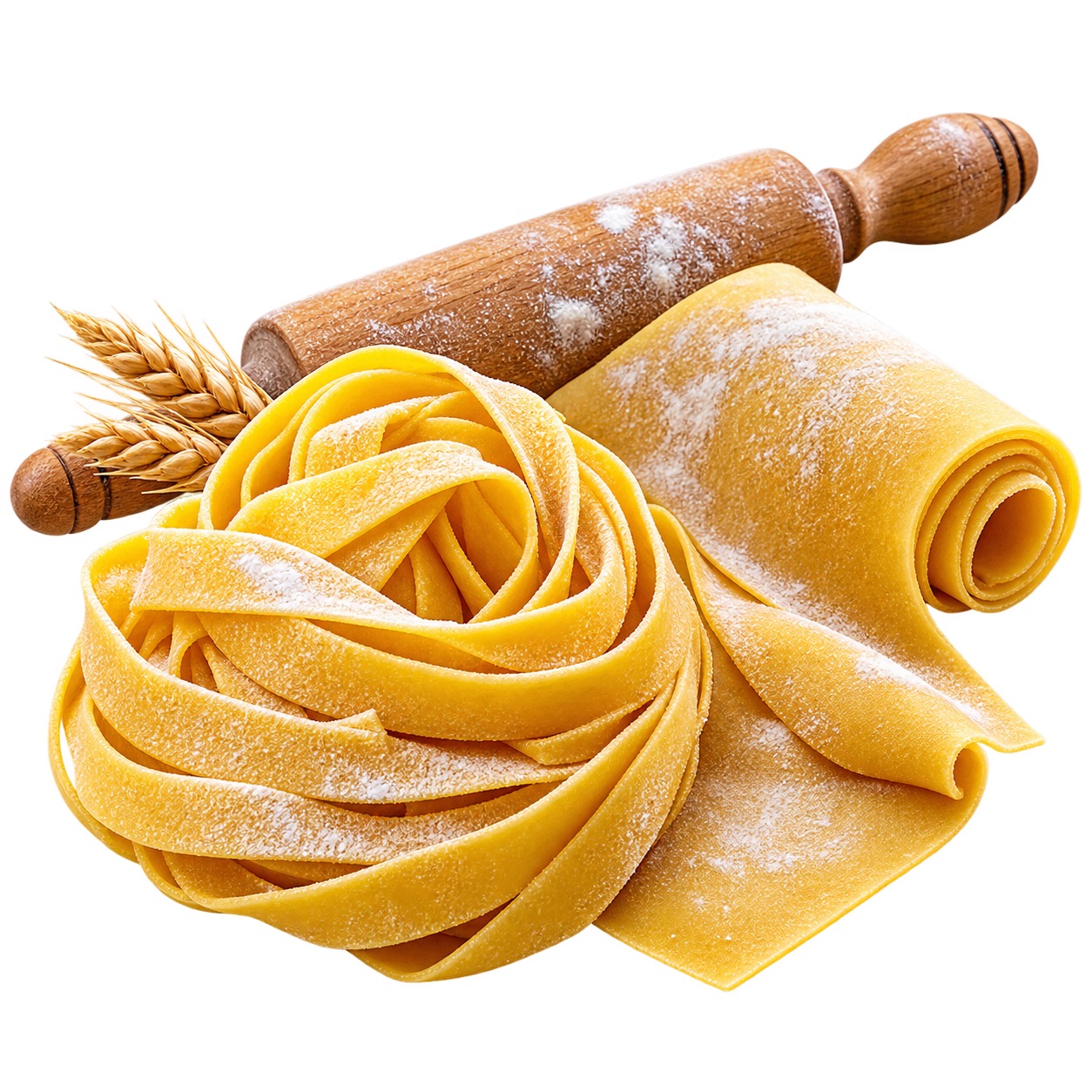
/Pasta/pasta.png
Tradition and identity
There is no single universal Italian fresh-pasta formula. Northern egg pastas, hand-rolled Tuscan shapes, southern semolina-and-water doughs, stuffed pasta and regional specialties each use flour, hydration and shaping methods suited to local ingredients and the sauce or filling they are meant to carry.
Emilia-Romagna is especially associated with richly egg-based dough rolled into thin sfoglia for tagliatelle, tortellini, lasagne and other filled or ribbon pastas.
Tuscany includes egg pastas such as pappardelle and filled tordelli as well as hand-rolled water-and-flour shapes such as pici, showing that “fresh pasta” describes a craft tradition rather than one formula.
Many southern fresh pastas rely on durum-wheat semolina or semola rimacinata with water, producing a firmer dough suited to hand-shaped forms and pronounced texture.
Dough science
The quality of fresh pasta depends on balancing flour strength, starch, protein, hydration and mechanical development. Eggs contribute water, protein, fat, emulsifiers and color; water-only doughs depend more directly on flour choice and hydration.
| Dough style | Typical flour direction | Liquid | Texture | Best applications |
|---|---|---|---|---|
| Fresh egg pasta | 00 flour, soft-wheat flour, or selected blends | Whole eggs, yolks, sometimes small water adjustment | Silky, extensible, tender but structured | Tagliatelle, pappardelle, lasagna sheets, ravioli, tortelli |
| Semolina-water pasta | Durum semolina / semola rimacinata | Water | Firmer bite, stronger surface texture | Orecchiette-style shapes, cavatelli-type shapes and regional hand-formed pasta |
| Rich yolk dough | Fine wheat flour with enough strength for rolling | Higher proportion of yolks | Deep color, rich flavor, fine texture | Fine-dining ribbons, stuffed pasta and delicate laminated sheets |
| Ancient-grain blend | Modern pasta flour blended with farro/spelt or other specialty wheat | Egg or water depending on formula | More aromatic, often less extensible | Rustic ribbons, filled pasta, tasting menus and grain-driven dishes |
Professional production
Good fresh pasta is built through controlled stages. The dough should become cohesive and elastic without being overworked or dried out, and resting is essential before rolling because it allows moisture to distribute and the dough to relax.
Weigh flour and liquid. Professional consistency begins with gram-based formulas rather than volume estimates.
Bring flour and eggs or water together until no dry pockets remain and a rough dough forms.
Develop enough gluten for elasticity and smoothness while avoiding unnecessary heat and surface drying.
Wrap tightly and rest so hydration evens out and gluten tension relaxes before sheeting or shaping.
Use a rolling pin or pasta machine, controlling thickness according to ribbons, lasagna, stuffed pasta or baked applications.
Cook promptly, refrigerate safely for short production holds, or freeze appropriately when the formula and shape allow.
Ancient and heritage grains
Farro/spelt and other heritage wheat varieties can contribute nutty, earthy and toasted-grain character to fresh pasta. They may also change gluten behavior, water absorption, extensibility and rolling strength, so professional formulas are normally tested as blends rather than assumed to behave like standard pasta flour.
Brings a pronounced grain aroma and rustic character. Depending on the flour, a partial blend can preserve handling strength while adding flavor.
Can contribute golden color, sweetness and wheat aroma. Hydration and sheetability should be tested because specialty flours vary by mill and extraction.
Bran and germ can interrupt gluten structure and absorb more water. Resting time, hydration and final sheet thickness may need adjustment.
Shapes and culinary use
Fresh pasta shape is functional. Width, thickness, surface area, folds and cavities determine how the pasta cooks and how it carries sauce.
Tuscany Cuisine archive
The historical images from the previous page are preserved here in a cleaner, accessible gallery so the original Tuscany Cuisine pasta record remains part of the rebuilt page.


Storage and production control
Fresh egg pasta contains raw egg and hydrated flour and must be managed as a refrigerated prepared product unless it is cooked or frozen according to the operation's food-safety plan.
Keep finished dough and shaped pasta covered to prevent drying and refrigerated under the operation's approved time-and-temperature controls.
Use enough dusting flour or semolina to prevent sticking without leaving excessive raw flour on the finished pasta or creating a heavy cooking-water slurry.
Standard fresh egg pasta contains wheat/gluten and egg. Alternative recipes require their own ingredient identities and should not inherit the allergen profile automatically.
Filling moisture, acidity, dairy, meat or seafood ingredients may shorten safe holding time and require additional HACCP controls.
Many shapes can be tray-frozen before packaging. Freeze in a single layer first so pieces remain separate and maintain shape.
Dough mixing, resting, rolling, cutting, filling and portioning should be scheduled before service so the Pasta Station is not overloaded during pickup.
Tuscany Cuisine platform record
The current shared recipe/inventory identity is fresh_egg_pasta_dough.
This page provides the permanent learning and icon destination while leaving the
formal Master Ingredient Registry code pending until it is assigned through the registry workflow.
Recipe · Pasta Station · Inventory · Purchasing · Production
/Pasta/pasta.png
Inventory: fresh_egg_pasta_dough
Registry code: formal assignment pending
The prepared-dough identity can be reused anywhere fresh egg pasta dough appears without creating duplicate recipe-specific ingredients.
Production can track dough preparation, rest time, rolling, cutting, filling and portioning as station labor and prep work.
The prepared dough can be tracked as a production item while its flour, eggs and other components remain separate raw inventory ingredients.