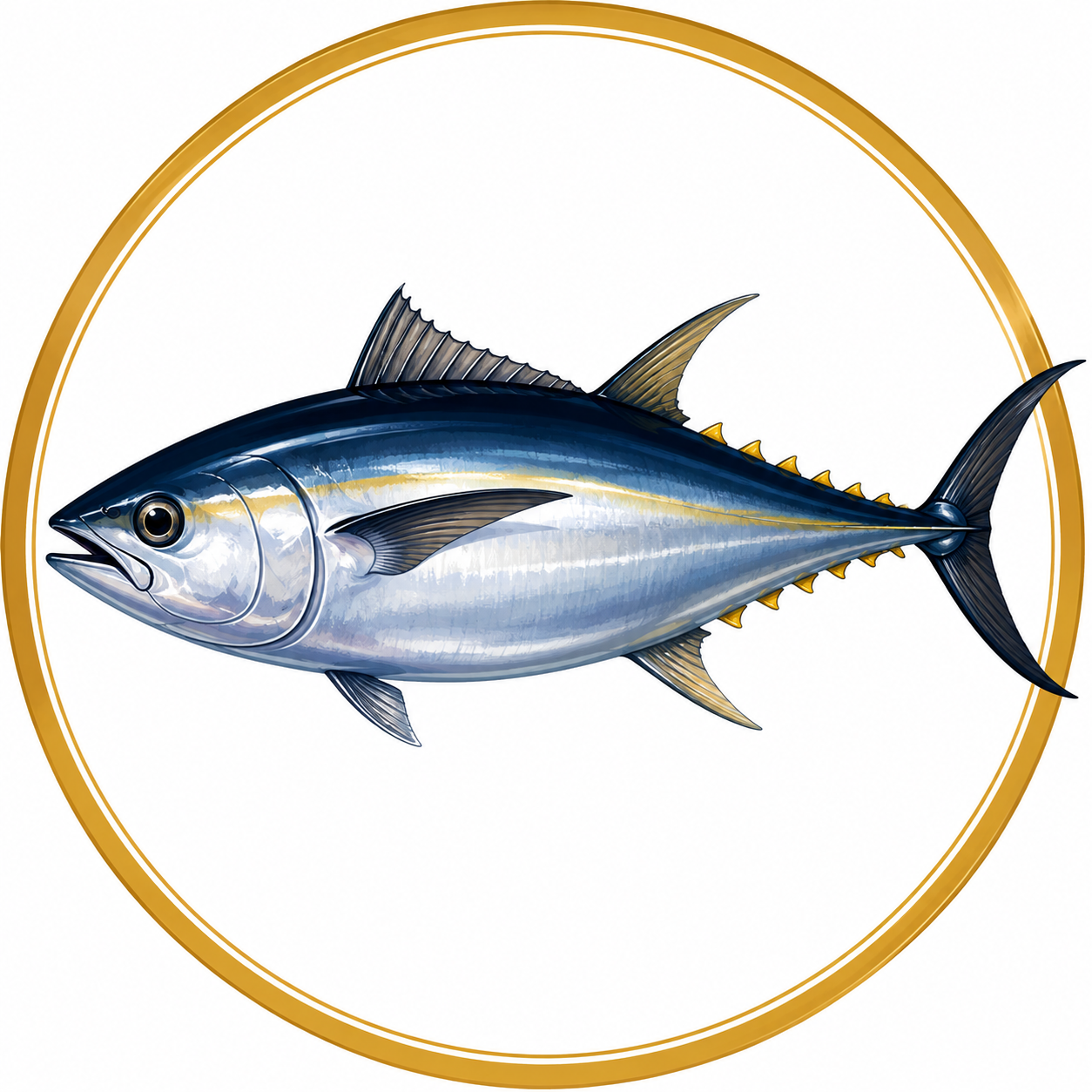
Species Identification
The Major Tuna Species a Chef Should Know
Market names can overlap. Always confirm the species, harvest area, harvest method,
fresh or frozen status, and intended culinary use with the supplier.
Luxury & High Fat
Bluefin Tuna
Thunnus thynnus · T. orientalis · T. maccoyii
Bluefin includes Atlantic, Pacific, and Southern species. It has deeply colored flesh,
substantial body size, and the richest belly fat of the major tunas.
- Flavor: rich, savory, clean, complex
- Texture: firm loin; melting fatty belly
- Premium cuts: akami, chutoro, otoro
- Potential size: Atlantic bluefin can exceed 1,000 lb; exceptional fish can be much larger
Best choices: sashimi, nigiri, crudo, tartare, tataki, gentle searing, grilling fatty collar or belly.
Premium Raw Use
Bigeye Tuna — Ahi
Thunnus obesus
Bigeye lives and feeds deeper than yellowfin and commonly develops more intramuscular fat.
It is one of the two tuna species commonly sold as ahi in Hawaiʻi.
- Flavor: full, clean, slightly richer than yellowfin
- Texture: tender, moist, fine-grained
- Color: deep reddish pink to red
- Market size: often sold as large loins, steaks, saku blocks, and cubes
Best choices: sashimi, poke, tartare, crudo, tataki, quick searing, rare center-cut steaks.
Versatile Restaurant Tuna
Yellowfin Tuna — Ahi
Thunnus albacares
Yellowfin is widely available, leaner than bigeye, and recognized by its yellow fins and finlets.
It is the other principal species called ahi in Hawaiʻi.
- Flavor: clean, mild-to-moderate
- Texture: firm, smooth, lean
- Potential size: up to about 6 ft and 400 lb
- Best value: reliable for both raw and cooked menu applications
Best choices: tartare, poke, sashimi-quality preparations, sesame searing, grilling, broiling, kebabs, smoking.
Mild & Pale
Albacore Tuna
Thunnus alalunga
Albacore has unusually long pectoral fins and lighter flesh than yellowfin, bigeye, or bluefin.
It is the species most associated with premium “white tuna” in canned products.
- Flavor: mild, delicate, slightly buttery
- Texture: tender but can dry when overcooked
- Potential size: roughly 47 in and around 80 lb in the Pacific
- Common forms: loins, steaks, smoked portions, canned
Best choices: gentle searing, poaching in olive oil, sous vide, smoking, salads, conserva, canned preparations.
Bold & Economical
Skipjack Tuna
Katsuwonus pelamis
Skipjack is smaller, fast-growing, dark-fleshed, and strongly flavored. It is a major species
for canned tuna and the traditional Japanese smoked and dried product katsuobushi.
- Flavor: pronounced, savory, mineral
- Texture: firm and relatively lean
- Typical size: smaller than the large Thunnus species
- Value: excellent when a stronger tuna identity is desired
Best choices: canning, smoking, curing, grilling, robust sauces, broths, flakes, preserved preparations.
Regional & Specialty
Other Tunas
Blackfin · Longtail · Bonito · Minor tunas
Regional markets may offer blackfin, longtail, little tunny, bullet tuna, bonito, and other
tuna-family fishes. Their flavor and value vary with species, size, season, and handling.
- Blackfin: smaller Atlantic tuna, valued fresh in regional markets
- Longtail: important in Indo-Pacific fisheries
- Bonito: bold flavor, excellent grilled, cured, or smoked
- Chef rule: never substitute by name alone; confirm species
Best choices: species-dependent; often excellent grilled, smoked, marinated, canned, or used in strongly seasoned dishes.