Ancient purpose
Controlled germination makes cereal grain more suitable for producing sweet, fermentable wort and malt flavor.
An ancient grain-derived ingredient with a modern role in bread, pizza, pastry, sauces, reductions and brewing. Understanding the exact malt form matters: enzyme-active diastatic malt, flavor-focused non-diastatic malt, malted grain flour and dry malt extract are related, but not interchangeable.
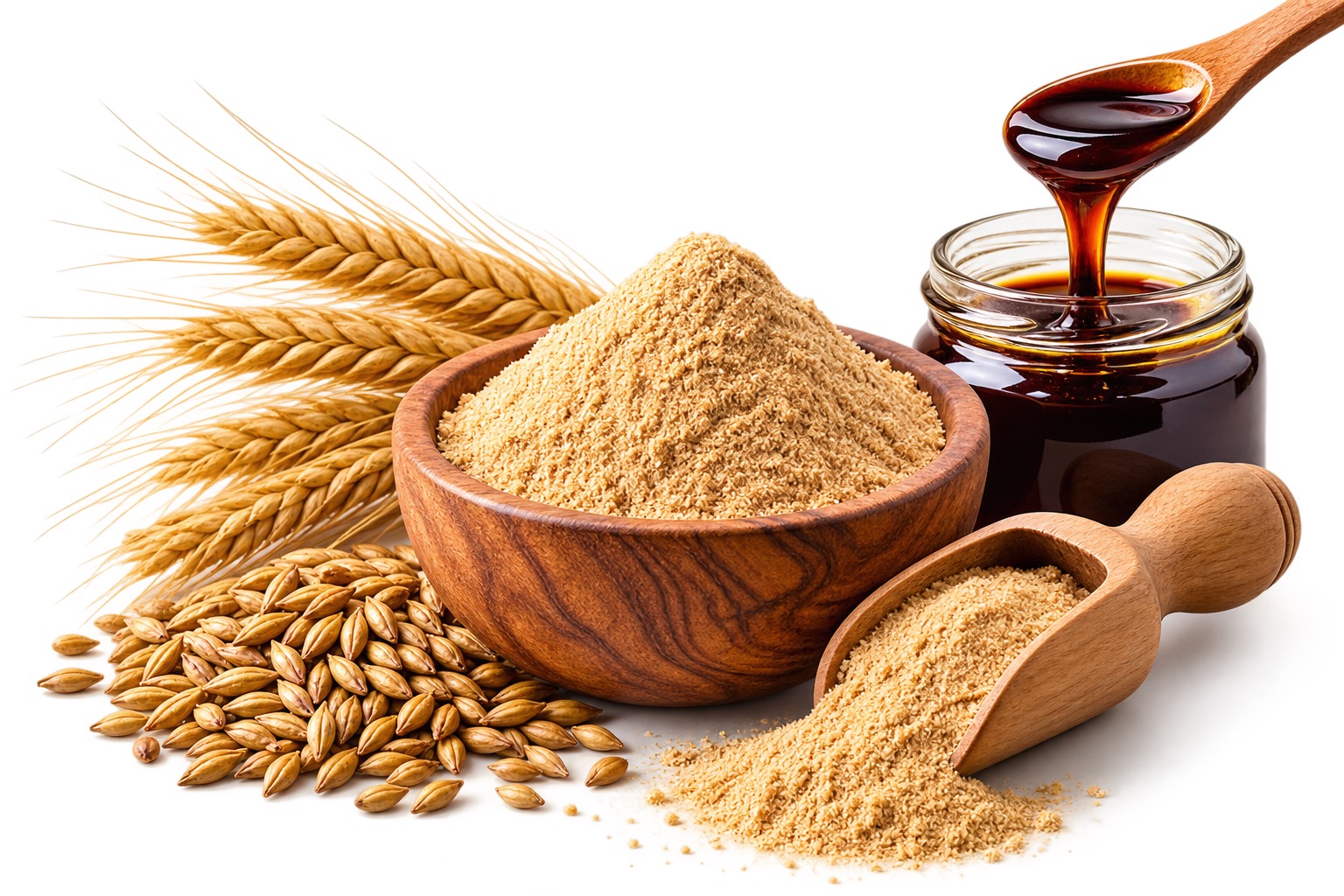
Ingredient Identity
Malt begins with cereal grain that is deliberately allowed to germinate under controlled conditions and is then dried. Barley is the classic brewing grain, although wheat, rye and other cereals can also be malted. The word dry malt can describe more than one commercial product, so a professional kitchen should identify the exact SKU before assuming its enzyme activity, sweetness or brewing behavior.
TC-PANTRY-DRY-MALT-001dry_maltTC-ICON-PANTRY-DRY-MALT-001gdry_malt identity until the purchasing
record confirms whether the product is diastatic malt powder, non-diastatic malt powder,
malted barley flour or dry malt extract.
Origins & History
Malting is one of the oldest forms of controlled cereal processing. Its exact first origin cannot be assigned confidently to one culture, but the practice is inseparable from the early history of beer: grain is wetted, germination begins, biochemical changes develop inside the kernel, and drying stops the process at the point useful to the brewer or food producer.
Controlled germination makes cereal grain more suitable for producing sweet, fermentable wort and malt flavor.
Barley became the dominant brewing malt because its grain structure and enzyme potential are especially useful for wort production.
Today maltsters precisely manage moisture, temperature, germination, airflow and kilning to create base and specialty malts with defined performance.
Fabrication
Grain is selected and cleaned. Uniform kernels help create more predictable water uptake and modification.
The grain is hydrated in controlled wet and air-rest cycles. Moisture activates the living kernel and begins the germination process.
Enzymatic systems develop and the kernel begins modifying proteins, cell walls and starch structures needed for later processing.
Heat and airflow remove moisture and stop germination. The kiln schedule also influences enzyme survival, aroma, toast character and color.
Finished malt can be ground into malt flour or powder for baking and culinary production.
For malt extract, malt is milled and mashed with water so enzymes convert starch into soluble sugars. The liquid wort is separated and concentrated; dry malt extract is the dried form of that concentrated malt wort.
Know the Product
| Product | Main Character | Best Professional Uses |
|---|---|---|
| Diastatic Malt Powder | Retains useful starch-degrading enzyme activity. | Bread, rolls, pizza and fermented dough where additional enzymatic conversion can support yeast fermentation, volume and browning. |
| Non-Diastatic Malt Powder | Little or no useful diastatic enzyme activity; chosen for flavor, sweetness and color. | Bagels, pretzels, breads, pastries, glazes, desserts and savory applications where malt flavor is wanted without active enzyme action. |
| Malted Barley Flour | Ground malted barley; activity depends on how the malt was processed and kilned. | Flour correction, bread formulas, dough systems and bakery production. |
| Dry Malt Extract (DME) | Dried, concentrated malt-derived wort rich in soluble malt carbohydrates. | Brewing, yeast starters, malt beverages, confectionery, bakery flavor and selected sauce or glaze systems. |
Baking & Dough Production
When diastatic enzymes are active, starch can be broken into smaller sugars that become available to yeast during dough fermentation.
Additional sugars can increase browning during baking, producing a deeper crust color when the formula and bake are properly balanced.
Non-diastatic malt contributes cereal, toasted, honeyed or caramel-like notes without being used primarily for enzyme activity.
Used in selected lean and enriched dough systems to adjust fermentation, crust and characteristic malt flavor.
Small controlled quantities of enzymatically active malt may help doughs that need more fermentable sugar, while non-diastatic malt can be chosen for flavor and browning.
Malt is strongly associated with the traditional flavor profile of bagel and pretzel production, appearing in dough formulas, boiling solutions or finishing systems depending on the recipe.
Sauces, Reductions & Savory Cuisine
Malt products can also bring sweetness, roasted cereal depth, color and viscosity to savory cooking. In sauces, glazes and reductions, the key question is usually flavor and soluble carbohydrate content rather than dough enzyme activity.
Malt can concentrate into a glossy, sweet-savory reduction and balance wine acidity or bitterness.
Malt sweetness and cereal depth can complement roasted meat, vegetables, barbecue-style glazes and finishing sauces.
Selected malt products can reinforce roasted flavor in gravies, braising sauces and dark savory preparations.
Malt sweetness can balance acid and spice in selected condiment formulations.
Malt pairs naturally with chocolate, caramel, coffee, nuts, dairy and baked-grain flavors.
Because dry malt products vary, sweetness and solids must be evaluated by the exact commercial SKU.
Brewing & Alcohol Fermentation
Malt is essential to traditional beer production because malting develops the grain and its enzyme system, and mashing converts starch into a sugar-rich liquid called wort. Yeast then ferments the available sugars into ethanol and carbon dioxide. Malt therefore supports alcoholic fermentation by supplying fermentable substrate and characteristic flavor, but malt itself is not the microorganism that produces alcohol.
Malting prepares the barley or other cereal for extraction and enzymatic conversion.
Milled malt is mixed with water under controlled temperatures so enzymes transform starch into soluble sugars and dextrins.
The sweet liquid is separated from the grain solids and becomes the fermentation medium.
Brewing yeast consumes fermentable sugars and produces alcohol, carbon dioxide and numerous aroma compounds.
Flavor & Color
Light cereal, cracker, bread-dough and mild honeyed character.
Deeper biscuit, toast, crust and nut-like notes.
Depending on processing, flavors can progress toward caramel, cocoa, coffee and roasted grain.
Storage & Receiving
Protect from humidity, heat and direct sunlight. Dry malt powders are hygroscopic and can clump when exposed to moisture.
Use airtight food-safe containers and protect from pantry pests, odors and cross-contact.
Receiving records should state diastatic, non-diastatic, malted flour or dry malt extract rather than relying only on the word “malt.”
Confirmed Tuscany Cuisine Usage
Zucchini Scapece Filled Tomato uses 120 g dry malt with 150 g Red Wine / Vino Rosso for a syrupy plating reduction. The source quantity is preserved exactly.
dry_malt identity until the production SKU is confirmed.
Tuscany Cuisine Platform Record
TC-PANTRY-DRY-MALT-001dry_maltTC-ICON-PANTRY-DRY-MALT-001/academy/ibrary/pantry/flours/malt.png/academy/ibrary/pantry/flours/drymalt.htmlTechnical References