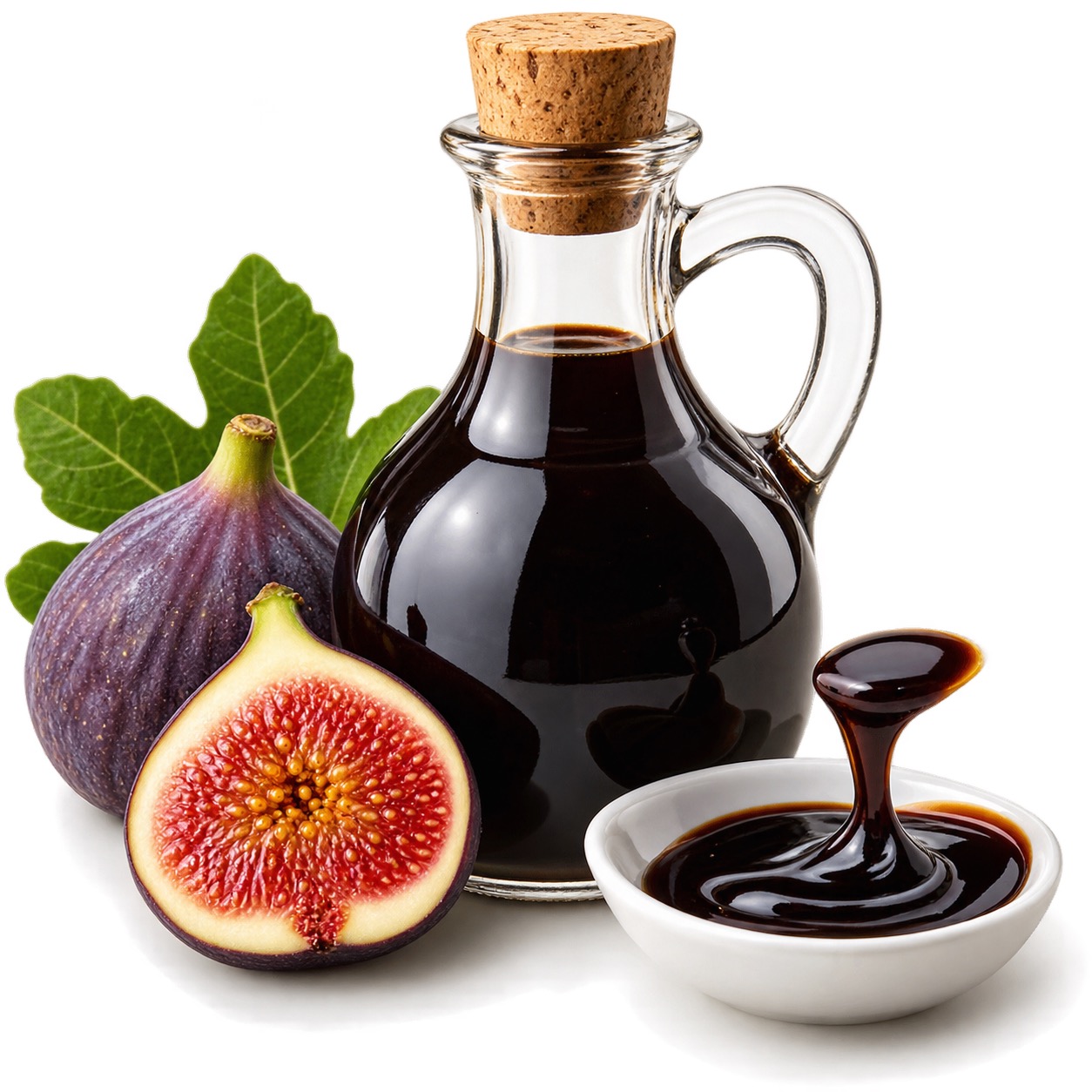
Recipe Overview
This preparation turns dark figs into a smooth balsamic finishing glaze. The figs provide body and natural fruit sweetness, balsamic vinegar supplies acidity and depth, and the potable water helps the fruit soften evenly during the first stage of cooking. After blending and fine straining, the mixture is reduced only until it reaches a glossy syrup consistency.
Flavor Profile
Sweet-acidic, fig-forward, tangy, concentrated and glossy.
Best Uses
Prosciutto, arugula, Parmigiano, aged cheeses, charcuterie, roasted vegetables and composed salads.
Ingredients
Base recipe = 1 batch
-
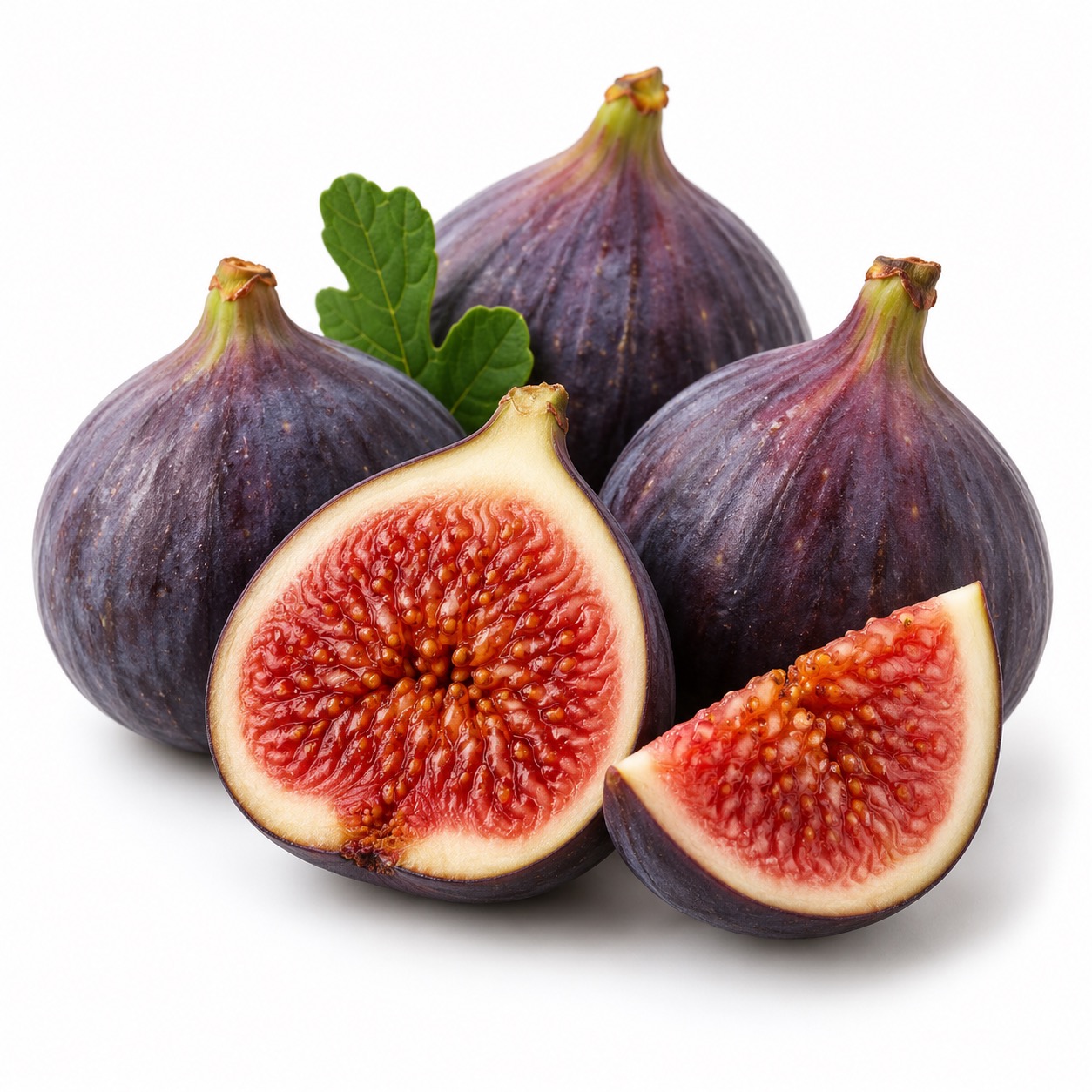 Fresh Figs
— 250 g, dark variety, cut into pieces
PRODUCE-FIG-FRESH
Fresh Figs
— 250 g, dark variety, cut into pieces
PRODUCE-FIG-FRESH
-
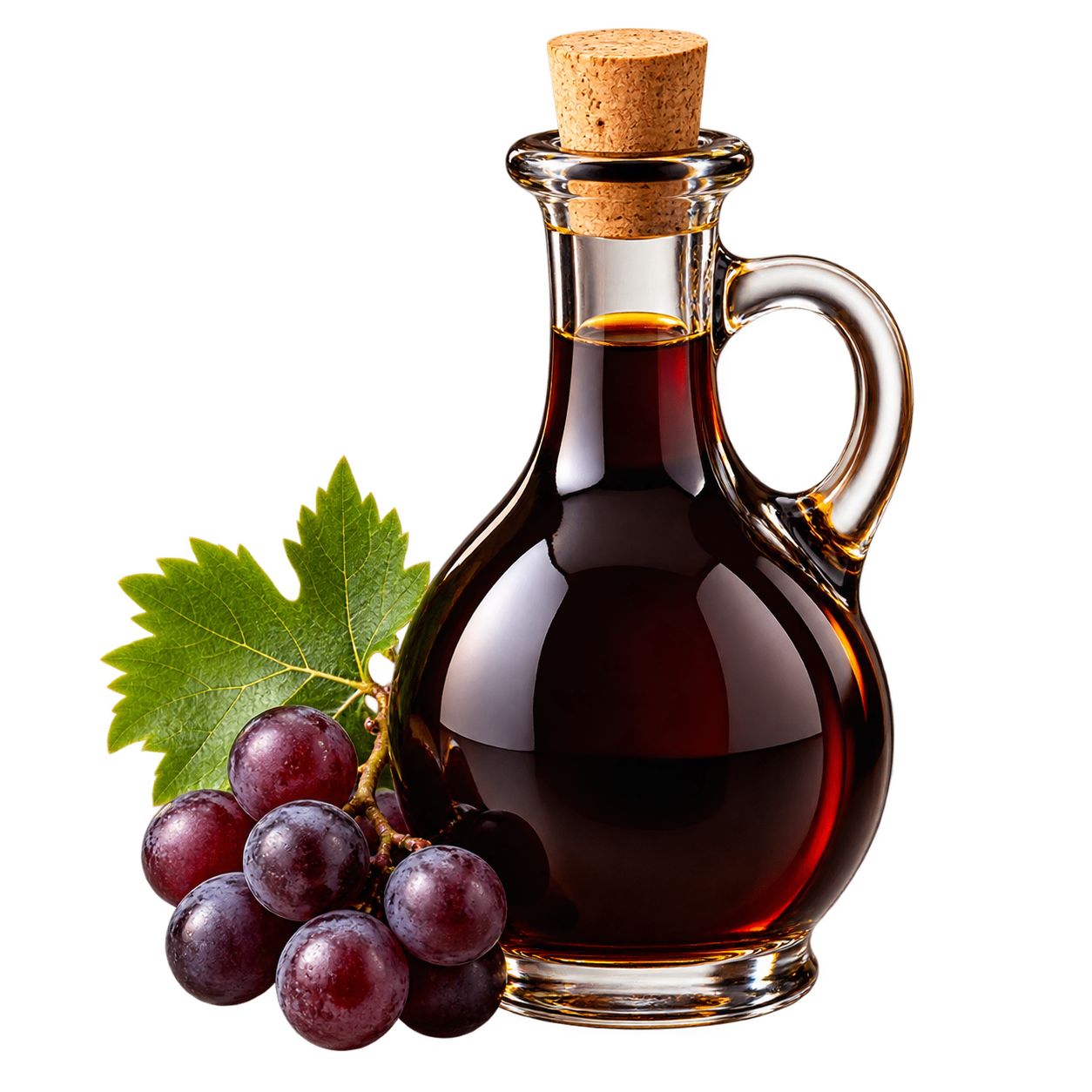 Balsamic Vinegar
— 87.5 g
VINEGAR-BALSAMIC-0001
Balsamic Vinegar
— 87.5 g
VINEGAR-BALSAMIC-0001
-
 Potable Water
— 50 g
WATER-POTABLE-001
Potable Water
— 50 g
WATER-POTABLE-001
Preparation
- Cut the 250 g dark figs into small pieces.
- Place the figs in a saucepan and add 87.5 g regular balsamic vinegar and 50 g potable water.
- Bring to a gentle simmer and cook slowly, stirring periodically, until the figs are completely softened and broken down into the liquid.
- Transfer the hot mixture to a blender and blend until completely smooth.
- Pass the purée through a fine-mesh strainer, removing the seeds and coarse solids.
- Return the strained mixture to a clean saucepan.
- Reduce gently until the glaze becomes glossy and syrupy, coats the back of a spoon, and holds a controlled finishing drizzle.
- Remove from the heat, cool, transfer to a clean labeled squeeze bottle or container, and refrigerate according to the house production standard.
Chef production note: the final gram yield depends on the reduction endpoint. Once the finished batch is weighed,
that measured yield can be entered into the production system for exact inventory conversion and recipe costing.