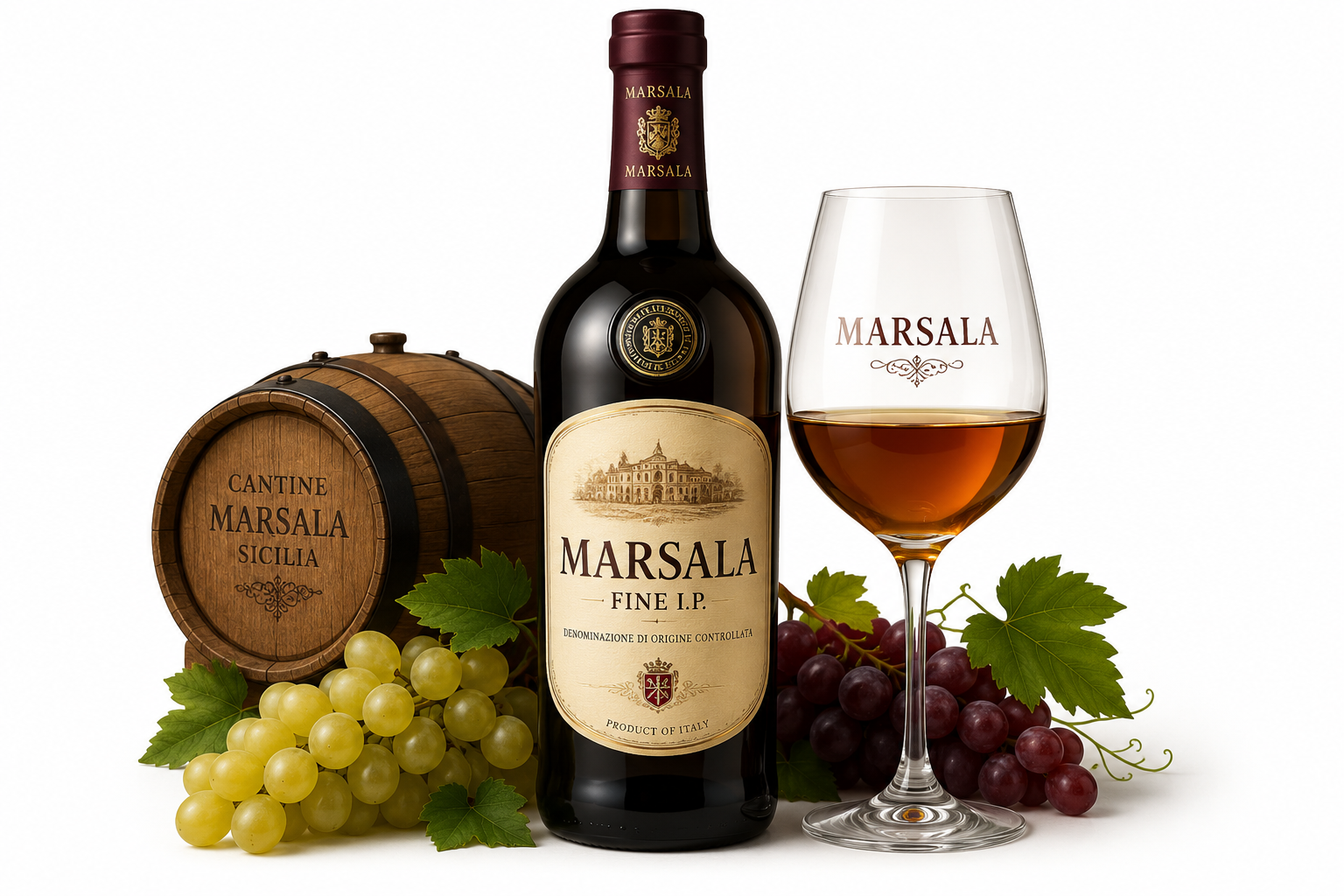
One of Sicily's most historic wines: fortified, aged and shaped by the warm
western Sicilian climate, native grape varieties and centuries of cellar tradition.
Marsala can be dry or sweet, youthful or deeply aged, and belongs equally in the
glass and in the professional kitchen.
SicilyMarsala DOCFortified WineGrilloDry & SweetCulinary Use
What Is Marsala?
Marsala is a fortified wine associated with western Sicily and the historic port city
of Marsala. Fermented wine is strengthened with grape-derived alcohol, then matured
according to the style being produced. Depending on grape composition, cellar method,
color, sweetness and age, Marsala can range from bright and savory to nutty, oxidative,
rich and dessert-like.
Professional cooks often know Marsala through sauces and deglazing, but true Marsala
is much more than “cooking wine.” Quality bottles are legitimate fortified wines with
regional identity, controlled production and the ability to develop substantial complexity
with age.
History: Sicily, Trade and the Port of Marsala
Marsala became internationally famous through Mediterranean wine culture and British commercial influence.
Wine has been produced in Sicily for thousands of years, but the modern commercial story
of Marsala is closely associated with the eighteenth century. English merchant John Woodhouse
is traditionally linked with the international expansion of Marsala after encountering the
local wine in western Sicily in the 1770s. Fortification helped the wine survive sea transport
and made it commercially attractive to British markets accustomed to Port, Madeira and Sherry.
Other merchant families and Sicilian producers expanded the trade, and Marsala became one of
Italy's best-known fortified wines. Modern quality-focused producers continue to protect the
historic identity of the wine while also demonstrating that dry, aged Marsala can be a serious
table and contemplative wine, not merely an ingredient.
How Marsala Is Produced
Grape variety, fermentation, fortification and maturation all influence the finished wine.
1
Harvest
Sicilian grapes are harvested at a balance of sugar, acidity, aroma and desired style.
2
Fermentation
Grapes are pressed and fermented into a base wine.
3
Fortification
Wine is strengthened with grape-derived alcohol according to the intended Marsala style.
4
Maturation
The fortified wine is aged in wood for the period and method required by its category.
5
Blending & Bottling
Mature lots may be assembled to achieve balance, continuity and producer style.
Quality principle: Marsala is not defined by sweetness alone.
Dryness, grape variety, barrel maturation, oxidative development, age and producer style
are all major elements of quality.
Marsala Colors
The traditional DOC color families help organize the wine's visual and grape identity.
Oro · Gold
Golden Marsala is made from permitted white varieties and typically shows dried fruit,
citrus peel, almond, spice and evolving oxidative notes with age.
Ambra · Amber
Amber Marsala develops deeper warm color and may traditionally include cooked grape must
components permitted within the style, giving additional richness and depth.
Rubino · Ruby
Ruby Marsala incorporates permitted red varieties and can show red-fruit and darker-toned
aromas alongside the structure of a fortified wine.
Age & Quality Classifications
Longer maturation generally produces greater oxidative complexity and concentration.
Classification
Minimum Aging
General Character
Typical Professional Use
Fine
At least 1 year
Younger, fresher fortified style
Cooking, cocktails, approachable service
Superiore
At least 2 years
More developed oak and oxidative character
Sauces, sipping, pairing
Superiore Riserva
At least 4 years
Deeper complexity and maturity
Premium service and pairing
Vergine / Soleras
At least 5 years
Dry, structured, mature and oxidative
Fine-wine service and savory pairing
Vergine Riserva / Stravecchio
At least 10 years
Highly evolved, concentrated and complex
Premium sipping and collector-level service
Dry, Semi-Dry and Sweet Marsala
Sweetness changes both beverage service and culinary application.
Secco · Dry
Dry Marsala is especially valuable in savory cooking because it contributes
aroma, acidity, nuttiness and fortified-wine depth without excessive sweetness.
Semisecco · Semi-Dry
A middle style that can bridge savory pairings and richer preparations while
still offering noticeable sweetness.
Dolce · Sweet
Sweet Marsala is particularly suited to pastry, zabaglione, fruit, chocolate,
almond desserts and after-dinner service.
Professional Culinary Uses
Marsala is one of the most useful fortified wines in classical and Italian-inspired kitchens.
Deglazing
Dry Marsala dissolves fond and contributes aromatic sweetness, oxidation and depth
to meat, poultry and mushroom pan sauces.
Marsala Sauces
The wine pairs naturally with chicken, veal, mushrooms, demi-glace, cream,
butter and roasted meat juices.
Terrines & Pâtés
A measured amount can support liver, poultry and charcuterie preparations with
dried-fruit and nutty complexity.
Zabaglione
Marsala is one of the classic wines for zabaglione, where eggs, sugar and fortified
wine are whisked into a warm foamy custard.
Desserts
Useful with tiramisù-style preparations, fruit, pastry creams, cakes, nuts,
dried fruit and chocolate.
Beverage Service
Quality aged Marsala can be served as an aperitivo, with cheese, alongside dessert,
or as a contemplative fortified wine.
Why Some Marsala Wines Cost More
Age is important, but production choices and scarcity also influence value.
Long Barrel Aging
Extended maturation occupies cellar space and ties up inventory for years.
Evaporation
Long maturation reduces the quantity remaining in barrel and concentrates the wine.
Old Reserves
Historic stocks, older solera-like reserves and long-aged releases are naturally scarce.
Grape & Vineyard Quality
Lower yields, better fruit and distinctive vineyard material raise production value.
Producer Reputation
Demand, track record, cellar skill and limited production can influence market price.
Category & Maturity
Riserva, Vergine and long-aged bottlings generally require more time and investment than young Fine styles.
Benchmark Marsala Producers to Know
Educational examples, not a paid ranking or endorsement.
Florio
Historic Marsala house with a broad range of traditional styles and a major role in the wine's international history.
Marco De Bartoli
Highly influential quality-focused Sicilian producer associated with serious dry and traditional Marsala expressions.
Carlo Pellegrino
Long-established Sicilian producer with Marsala styles across multiple categories.
Intorcia
Historic Marsala producer known for aged fortified-wine traditions.
Rallo
Sicilian wine producer with historical connections to western Sicily and Marsala production.
Curatolo Arini
Historic family producer with a long Marsala tradition and multiple fortified styles.
Marsala Ingredient Identity
One identity connects culinary education, recipes, beverage inventory and future purchasing records.
Dry Marsala Wine
Tuscany Cuisine uses dry_marsala_wine as the canonical culinary identity
for the dry Marsala used in savory recipes. Future records can add individual beverage SKUs,
sweetness categories, producers and aged Marsala styles while preserving this recipe identity.
Ingredient Usage Record on Tuscany Cuisine
Marsala already has an active recipe role and can now connect that use directly
to the Tuscany Cuisine Bar & Beverage Dashboard.
This page establishes Dry Marsala Wine as a reusable beverage and culinary ingredient identity
across recipes, beverage inventory, costing, purchasing and menu operations.