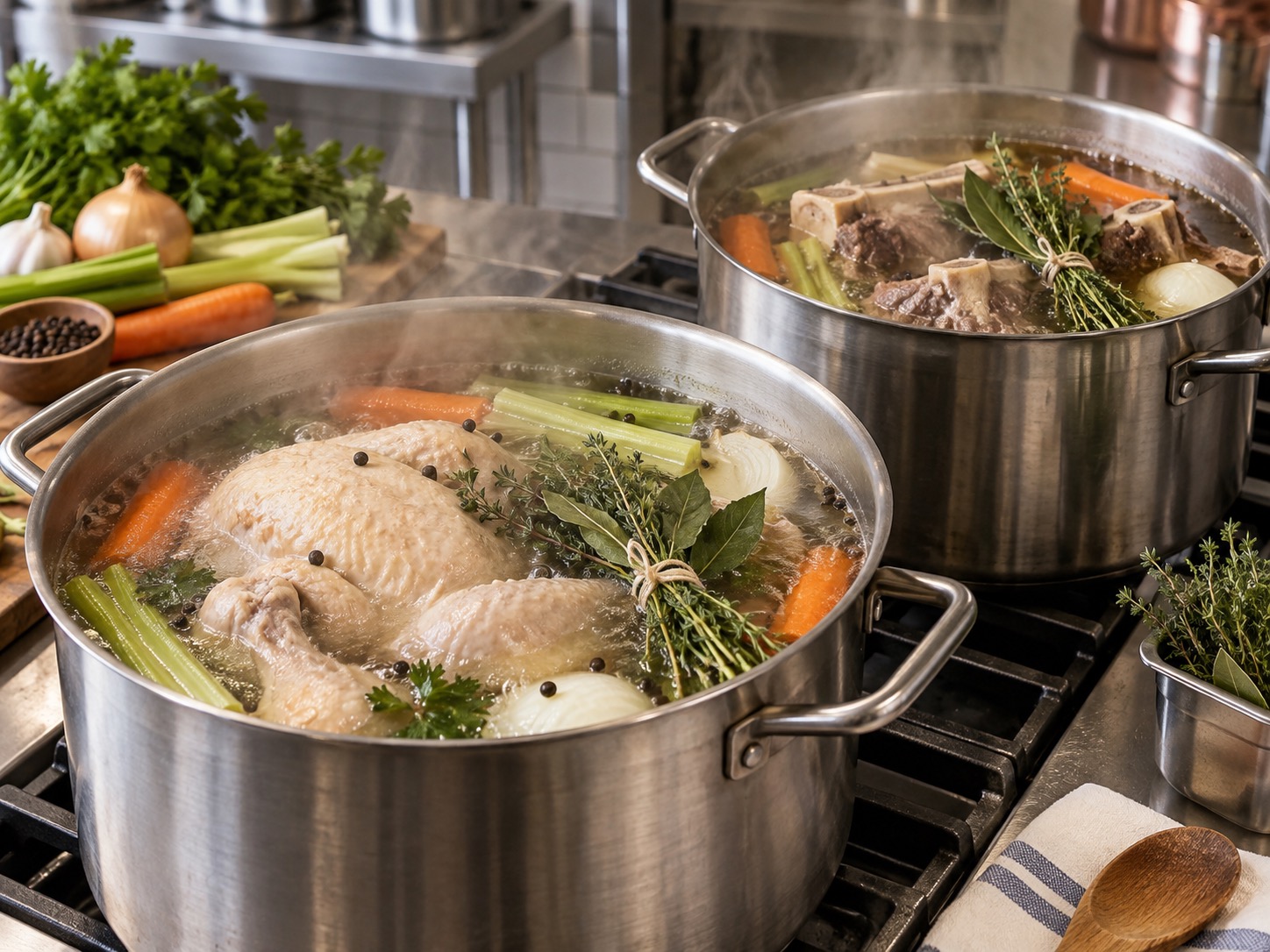
Why Stock Matters in the Kitchen
Stock is not just another liquid preparation. It is a working base used throughout the kitchen to carry and reinforce flavor. It can be used for soups and minestre, to finish sautéed meats, to enrich braises, to build velouté, to support reductions, and to help create consistent flavor in many different dishes. When the stock is prepared correctly, it brings the authentic taste of the protein, vegetables and herbs into every later preparation.
Hot Water vs. Cold Water — Stock and Bollito
For Stock — Start with Boiling Water
When the objective is to produce a clean, versatile kitchen stock, Tuscany Cuisine begins with boiling water. The chicken or beef is dried carefully with paper towels and then immersed into the already boiling water.
The immediate heat coagulates proteins at the surface quickly and helps limit the amount of impurities released into the liquid. Some foam will still rise and must always be skimmed and discarded. The stock is then reduced to a very gentle simmer so the protein, vegetables, grilled onions, herbs and peppercorns can slowly build flavor without making the liquid cloudy.
This method is particularly useful in a professional kitchen where the goal is a clean, natural stock that can later be used for soups, minestre, risotto, velouté, braises, sauté finishing and sauce production.
For Bollito / Boiled Meat — Start with Cold Water
When the principal objective is the boiled meat itself, Tuscany Cuisine starts the protein in cold water and raises the temperature gradually.
For approximately 1 kg of meat, about 2 hours of gentle cooking is a practical production target, but cut thickness and connective tissue vary. Confirm doneness and tenderness before removing the pot from the flame. If the bollito will be cooled for later service, cool the meat rapidly in its cooking liquid using the procedure described below.
The slow increase in temperature allows the heat to penetrate the meat more gently and evenly. This gives the connective tissue time to soften gradually and produces a tender, succulent boiled-meat texture.
The cooking liquid produced from bollito is still useful, but in this preparation the priority is the texture and tenderness of the meat rather than creating the clean foundational stock used throughout the kitchen.
| Preparation | Starting Water | Main Objective | Tuscany Cuisine Method |
|---|---|---|---|
| Chicken or Beef Stock | Boiling water | Clean, versatile kitchen stock | Immerse the dried protein into already boiling water, skim, then reduce to a gentle simmer. |
| Bollito / Boiled Meat | Cold water | Tender, evenly cooked meat | Begin the meat in cold water and increase the temperature gradually. |
Base Formula
The standard ratio for this preparation is 4 liters of water for every 1 kg of protein. This gives enough liquid to extract flavor properly while maintaining a clean and useful stock base for later preparations.
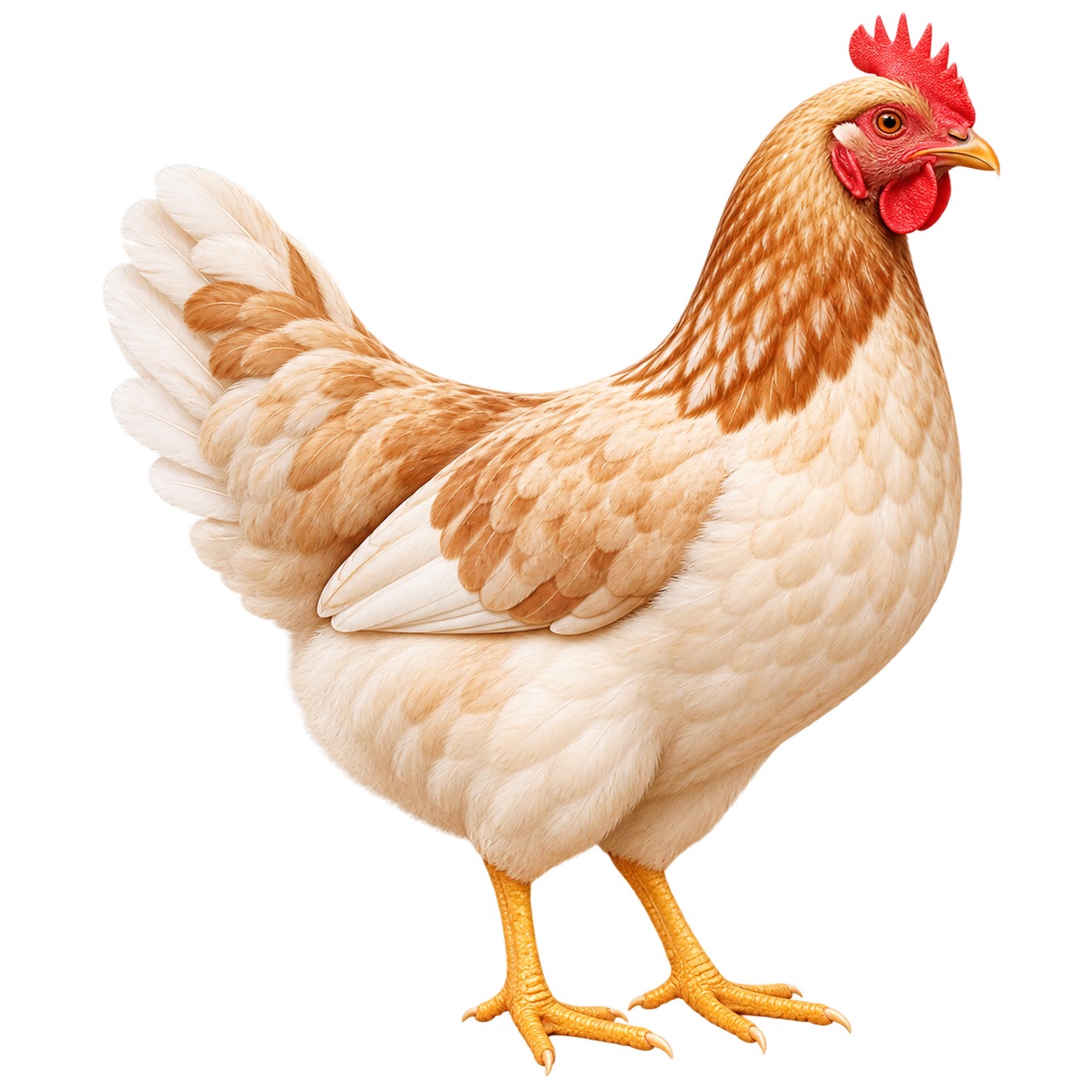
Pat the chicken dry before immersion. Use the poultry profile to study quality, fabrication and professional handling.
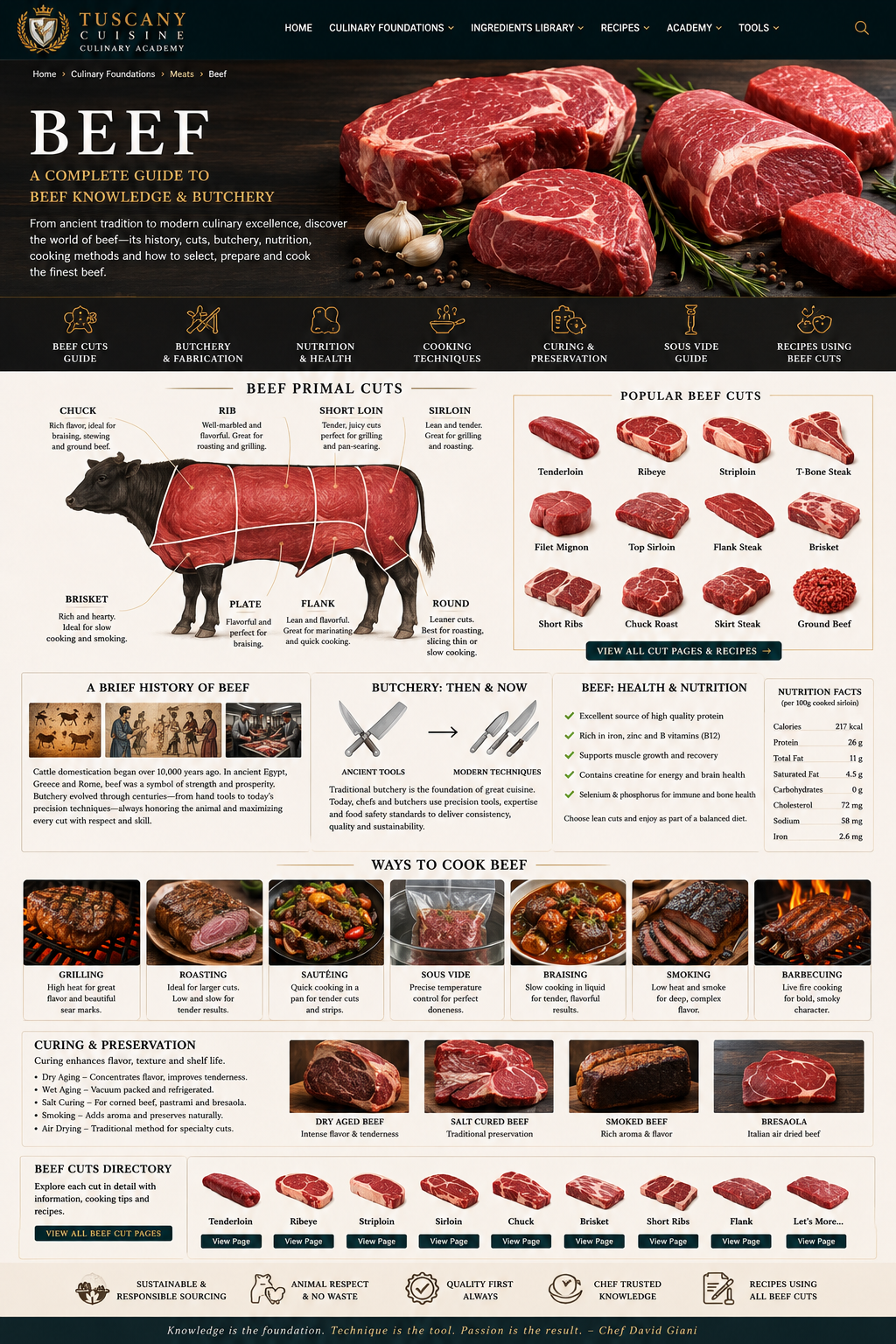
Use beef chuck for the beef-stock variation. The Beef Foundation page connects the protein to butchery, cuts and cooking knowledge.

For stock, bring the measured water to a boil first and then immerse the protein. For bollito, begin the meat in cold water and heat gradually.
Provides freshness and aromatic structure. The icon currently routes to the Ingredients Library until the dedicated celery record is published.
Grilling before immersion contributes deeper color, sweetness and roasted aroma.
Add whole peppercorns for restrained spice and aroma without clouding the stock with ground pepper.
Important Notes
- No salt: the stock should stay as natural as possible for flexible use in other recipes.
- Pat the protein dry with paper towels before immersing it.
- Use 4 liters of water for every 1 kg of protein.
- Use fine mesh chinois for straining.
- Skim and discard the foam that rises during simmering.
- Cool rapidly and refrigerate up to 4 days.
Professional Reminder
- For stock, bring the water to a boil first and then immerse the protein; for bollito, begin the meat in cold water and heat gradually.
- Slow simmering is necessary to develop flavor and body.
- The grilled onions contribute both color and aroma.
- Rapid cooling is essential: 135°F to 70°F within 2 hours, then 41°F or below within 6 hours total.
- After 4 days, the stock begins to lose its characteristic flavor profile.
Method
- Pat the whole chicken or beef chuck dry with paper towels to remove surface blood and moisture.
- Measure 4 liters of potable water for every 1 kg of protein and bring the water to a full boil before adding the protein.
- Pat the chicken or beef dry with paper towels, then immerse it into the boiling water. Skim and discard any foam or coagulated proteins that rise to the surface.
- Add the carrots, celery, grilled caramelized onions, bouquet garni and black peppercorns.
- Reduce to a gentle simmer. As foam rises to the surface, skim it off and discard it.
- Maintain a slow simmer for 6 to 8 hours to extract flavor, aroma and body.
- Strain the finished stock through a fine mesh chinois or fine mesh strainer.
- Begin rapid cooling immediately after straining. Cool from 135°F to 70°F within 2 hours, then to 41°F or below within a total of 6 hours, using an ice-water bath, shallow stainless-steel containers or a commercial blast chiller.
- Refrigerate the stock for up to 4 days and use it as needed in soups, sauces, braises and other preparations.
Kitchen Uses
Soups & Minestre
Use stock as the base for vegetable soups, rustic minestre, broths and many traditional preparations.
Sauces & Velouté
Stock is essential for making velouté, pan sauces, reductions and many classic kitchen sauces.
Braises & Sauté Finishing
Use stock to enrich braised meats, moisten sautéed dishes and bring depth to reductions and finishing sauces.
Food Safety, Cooling & Storage
| Control Point | Professional Guidance |
|---|---|
| Protein preparation | Pat dry with paper towels to remove blood and surface moisture before immersing in boiling water. |
| Water start | For stock, use 4 liters of potable water for every 1 kg of protein, bring it to a boil first, then immerse the protein. For bollito, begin the meat in cold water. |
| Foam removal | Skim and discard the foam that rises to the surface during simmering. |
| Simmering | Simmer gently for 6 to 8 hours. Avoid hard boiling. |
| Straining | Strain through a fine mesh chinois for a cleaner final stock. |
| Cooling | Cool from 135°F / 57°C to 70°F / 21°C within 2 hours, then to 41°F / 5°C or below within a total of 6 hours. Use shallow stainless-steel containers, ice-water bath or blast chiller. |
| Storage | Refrigerate up to 4 days. After that, the flavor begins to lose its characteristic profile. |
Professional Cooling — Bollito, Stock & Sauces
Cooling is part of the recipe, not an afterthought. Once the cooking is complete, both bollito and stock must move rapidly through the temperature range where bacteria can multiply. In a professional kitchen, use a calibrated thermometer and record the cooling temperatures and times.
Bollito — About 2 Hours Cooking, Then Cool in Its Broth
For a typical bollito production, approximately 2 hours of gentle cooking may be enough for the meat to become cooked through and tender, depending on the cut, weight and thickness. Do not rely on time alone: verify tenderness and use a thermometer.
When the bollito is ready, remove the pot from the flame. If the meat is to be cooled inside its cooking liquid to protect moisture and flavor, begin active cooling immediately. Do not leave a large hot stockpot at room temperature.
- Keep the meat submerged in enough broth to protect it from drying.
- Transfer the meat and broth into smaller, shallow stainless-steel containers whenever practical.
- Place the containers in an ice-water bath or use a commercial blast chiller.
- Stir the surrounding broth carefully when appropriate to release heat faster without damaging the meat.
- Monitor temperature in the thickest part of the meat and in the liquid.
- Meet the cooling limits: 135°F to 70°F within 2 hours, then 41°F or below within 6 hours total.
Starting around 200°F does not change the critical cooling limits. The product should begin chilling immediately, and once it passes 135°F the two-hour rapid-cooling stage is especially important.
Stock & Sauces — Strain and Cool Fast
Stock and sauces cool much faster after they are strained from the protein, bones, vegetables and herbs. After passing through the fine-mesh chinois, divide the liquid into shallow stainless-steel containers rather than leaving it in one deep stockpot.
Stainless steel is especially useful in professional kitchens because it transfers heat efficiently through the container walls and works well with ice baths and blast chillers. A deep plastic container generally slows heat transfer compared with a shallow metal pan.
- Strain immediately through the chinois.
- Divide into smaller or shallower stainless-steel containers.
- Use an ice-water bath, blast chiller or another approved rapid-cooling method.
- Leave containers loosely covered or uncovered only when protected from contamination during active cooling, according to the operation's food-safety plan.
- Stir the liquid periodically with a clean utensil when using an ice bath to accelerate cooling.
- Refrigerate at 41°F / 5°C or below once the cooling target is reached.
Chef Notes
A well-made stock should taste natural and clean, not salty or aggressive. That is why this preparation does not include salt: the final stock remains flexible and can be reduced, enriched or seasoned later according to the dish being prepared. The grilled caramelized onions help give the stock a richer color and more developed aroma, while the bouquet garni contributes herbal freshness without overpowering the protein flavor.
Teaching point for cooks and chefs: do not use the same starting-water method for every preparation. Tuscany Cuisine uses a hot-water start for stock and a cold-water start for bollito. The first is designed for a clean, versatile foundational liquid; the second is designed for tender, evenly cooked boiled meat.